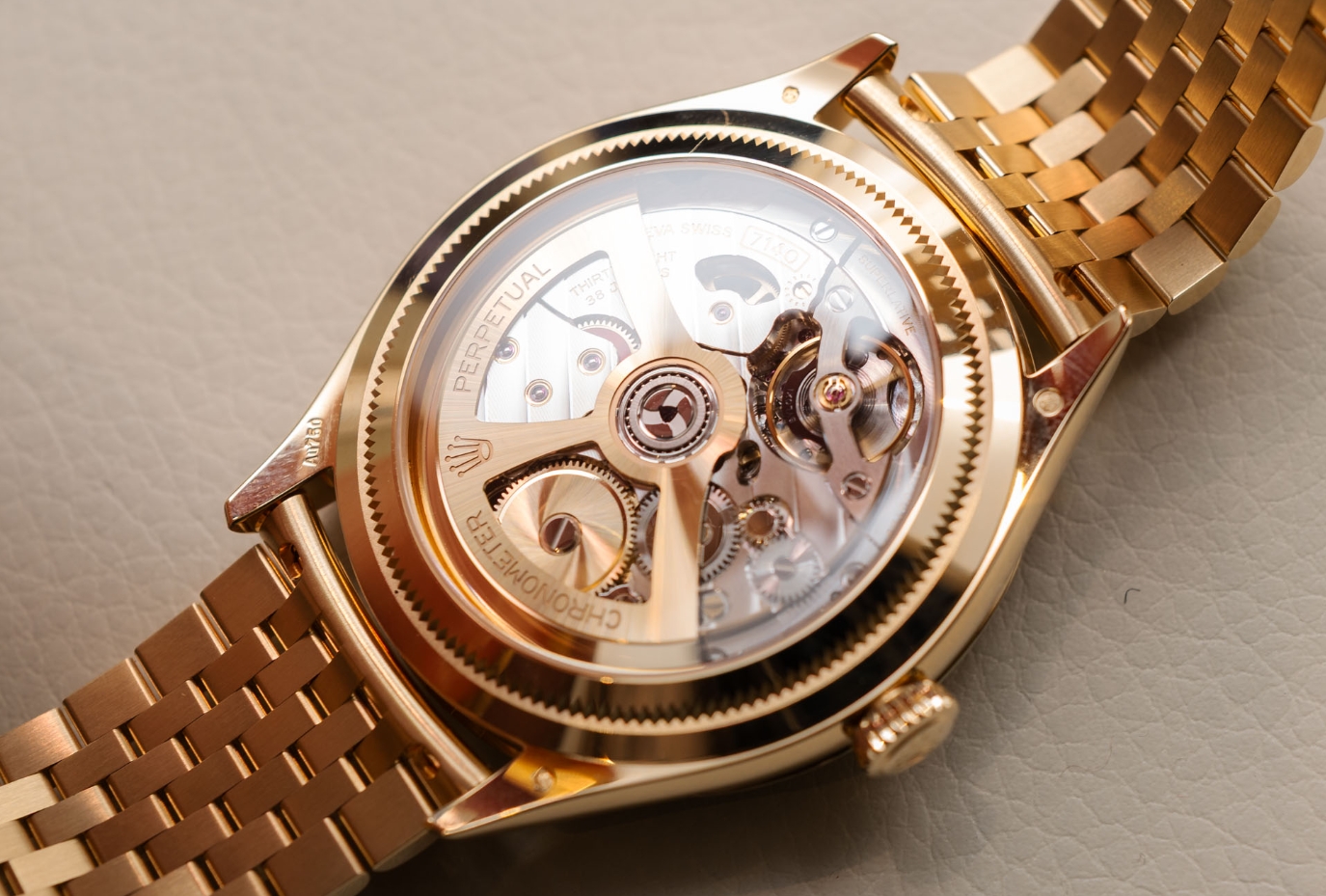
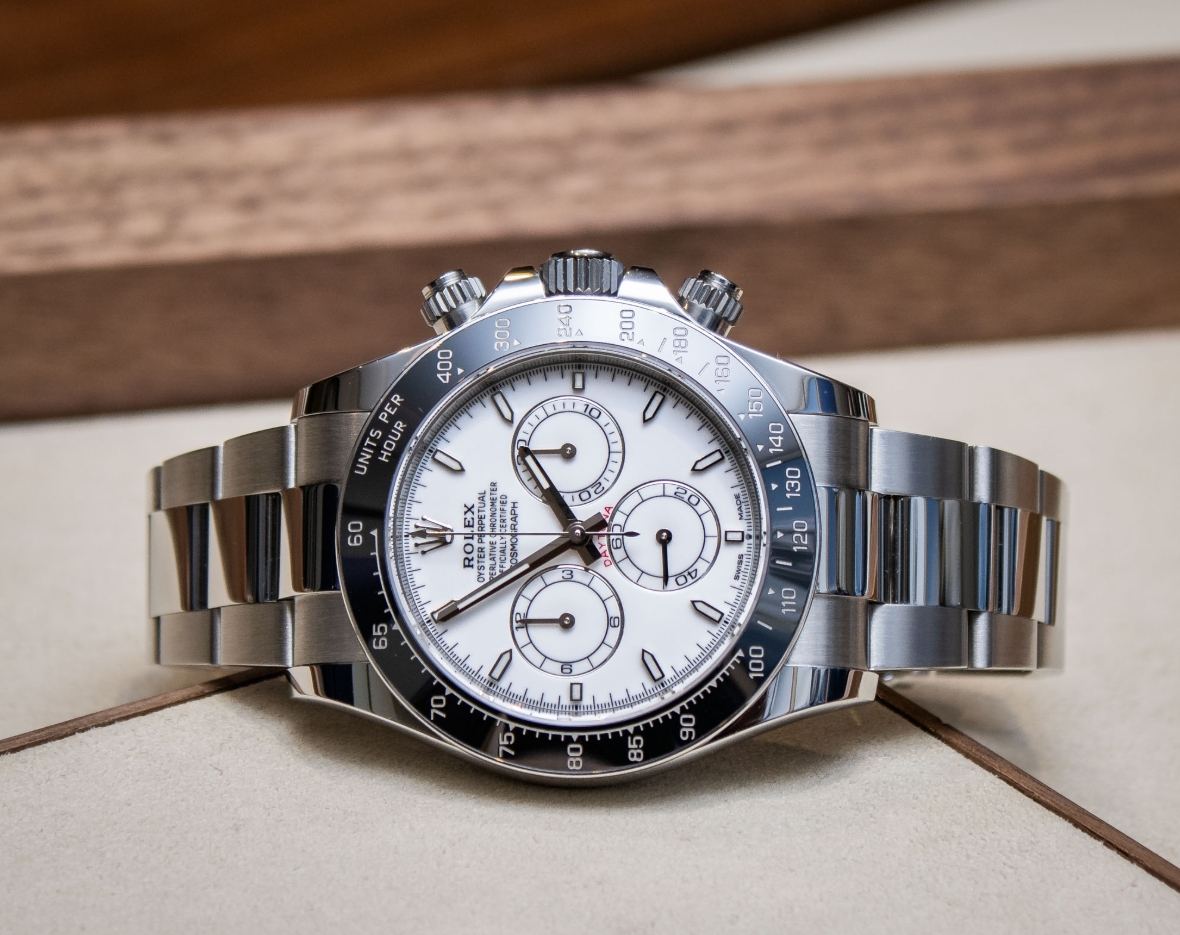
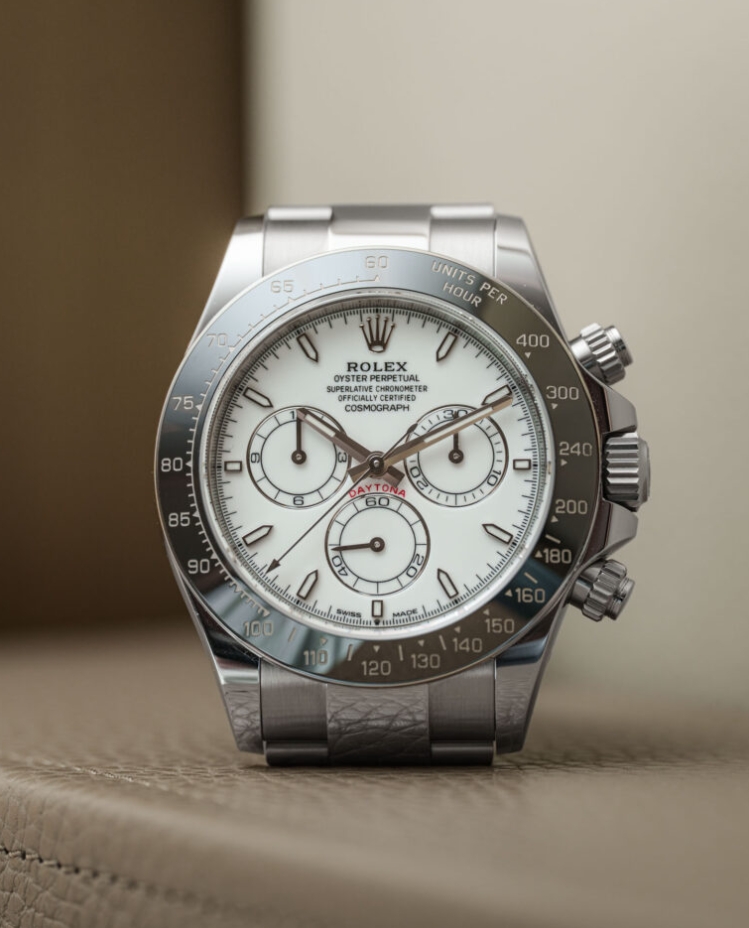
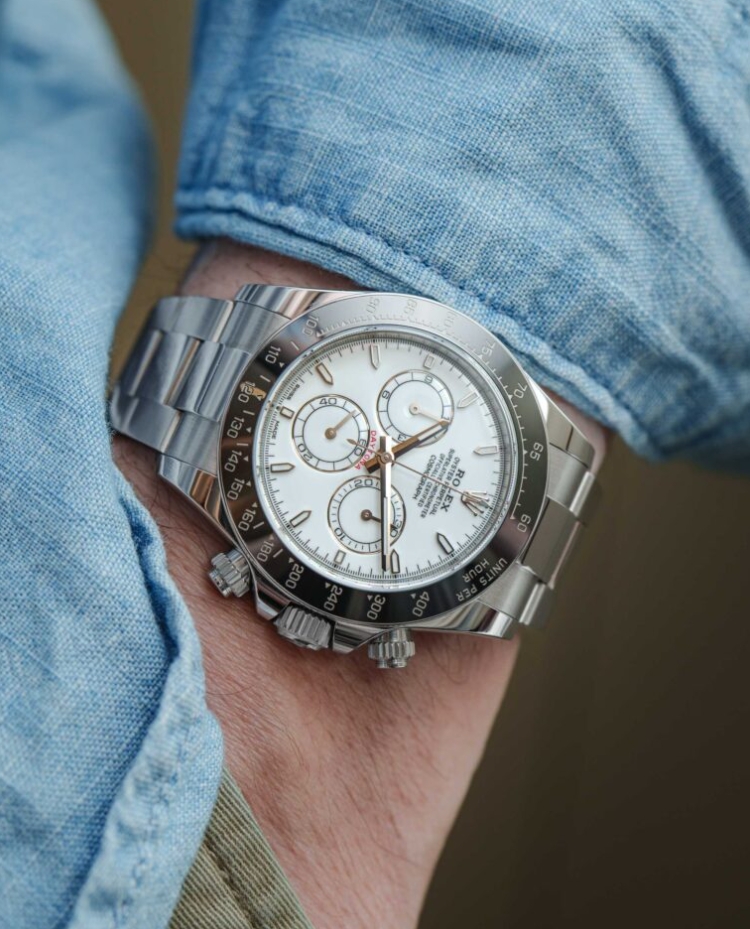
The 24 Hour Balance Of The Rolex Explorer II 226570 Replica

The Explorer II 226570 is unusual within the modern Rolex sports range. It has the scale and presence of a contemporary tool watch, but it keeps a fixed steel bezel instead of adopting the glossy ceramic insert seen on many other models. Its identity comes from that engraved 24-hour bezel, the broad orange hand and a dial designed to remain clear when ordinary clues about day and night are unavailable.
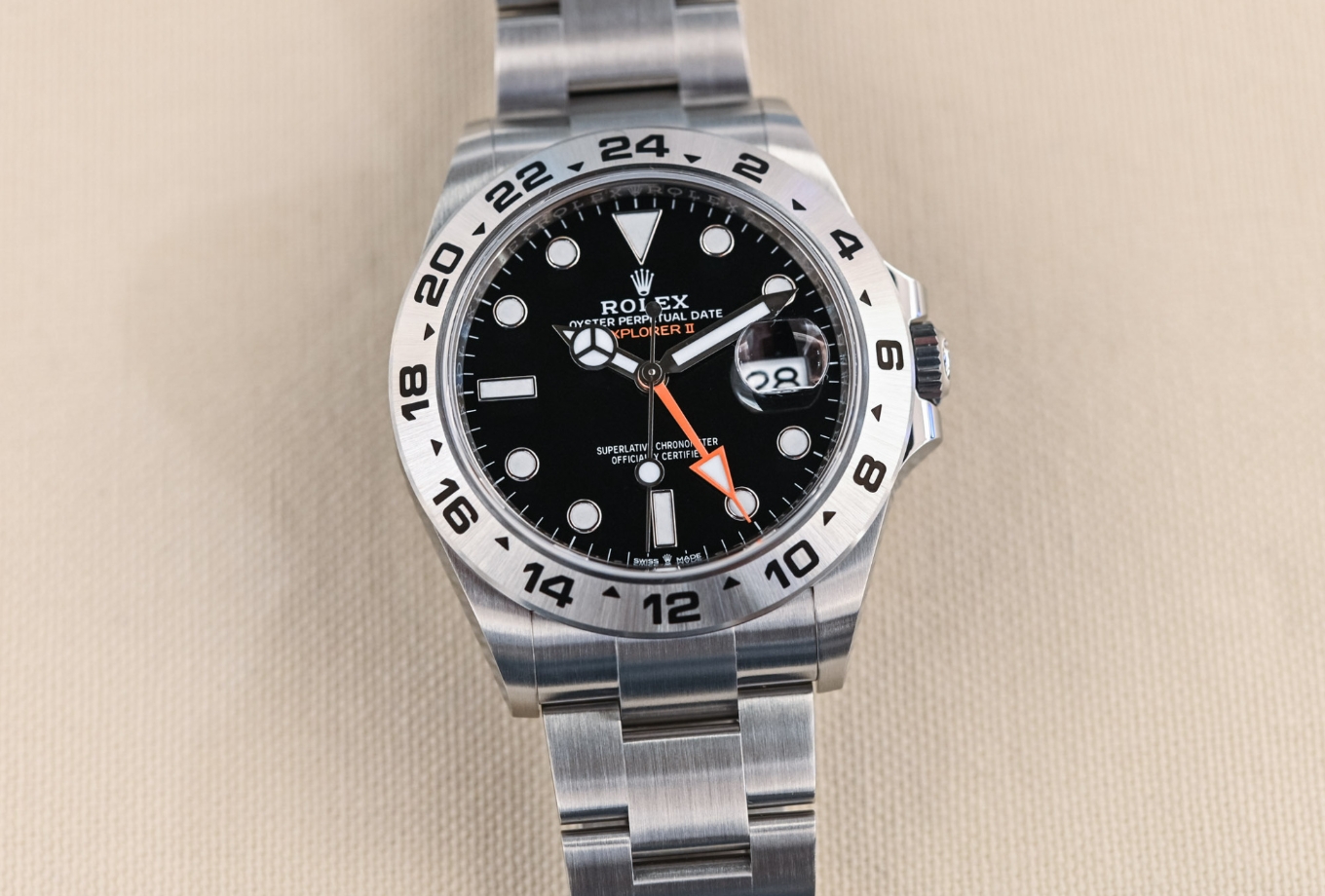
Rolex introduced reference 226570 in 2021 as the successor to the 216570. The case remained 42 mm, while the case and bracelet were subtly revised to improve their visual balance. The model continued with black and white dial choices, a date at three o’clock and a separately adjustable local hour hand. For readers comparing Rolex replica watches, those familiar ingredients make the reference easy to identify but difficult to reproduce convincingly.

A useful assessment of a Rolex Explorer II 226570 replica watch should start with the features that can be seen and demonstrated. Case shape, bezel engraving, dial spacing, date alignment and bracelet fit can be studied in clear photographs. The operation of the additional hand and jumping local hour needs an unedited video. Steel composition, movement construction, power reserve and water resistance require evidence beyond appearance.

The Bezel Case and Dial Define the 226570

The fixed bezel is the visual centre of the Explorer II. Its radial brushing should create a restrained circular grain rather than the mirror-like reflection of a polished surface. The engraved numerals and triangular markers need consistent depth, clean black filling and accurate spacing around the full 24-hour scale. Because the bezel does not rotate, the triangle at twelve should remain aligned with the centre of the dial and the Rolex coronet.

This detail separates the Explorer II from the GMT-Master II in both appearance and use. The broad orange hand completes one rotation every 24 hours and points to the fixed scale. It can indicate whether the displayed time belongs to day or night, or work with the conventional hour hand to show a second time zone. A replica should demonstrate that the local hour hand can be adjusted in one-hour steps without dragging the minute hand or disturbing the reference-time display.

Good Rolex Explorer II replica 24 hour hand and bezel alignment involves more than placing an orange arrow on the dial. The hand needs the correct length to reach the bezel scale visually, its arrowhead should have balanced proportions and the orange colour should remain consistent from the centre to the tip. Check its position at several times of day. A hand that sits correctly at twelve may reveal inaccurate indexing when it points toward six or eighteen on the bezel.
The 42 mm case gives the watch a broad stance, yet diameter is only one part of the result. Lug shape, dial opening, bezel width and the first bracelet links determine whether the watch looks balanced or overly heavy. Rolex revised the case and bracelet relationship for the 226570 while retaining the established size. A replica with thick inner lugs or narrow end links can resemble the older generation even when its listed diameter is correct.

When comparing 42 mm Rolex Explorer II replica proportions, use a direct front photograph, a low side view and a normal wrist image. The front view reveals the relationship between the bezel and dial. The side view shows crystal height, crown guards and case-back depth. The wrist image explains whether the lugs remain within the wearer’s wrist and whether the bracelet begins to curve naturally. A macro photograph alone can make a large case appear deceptively compact.
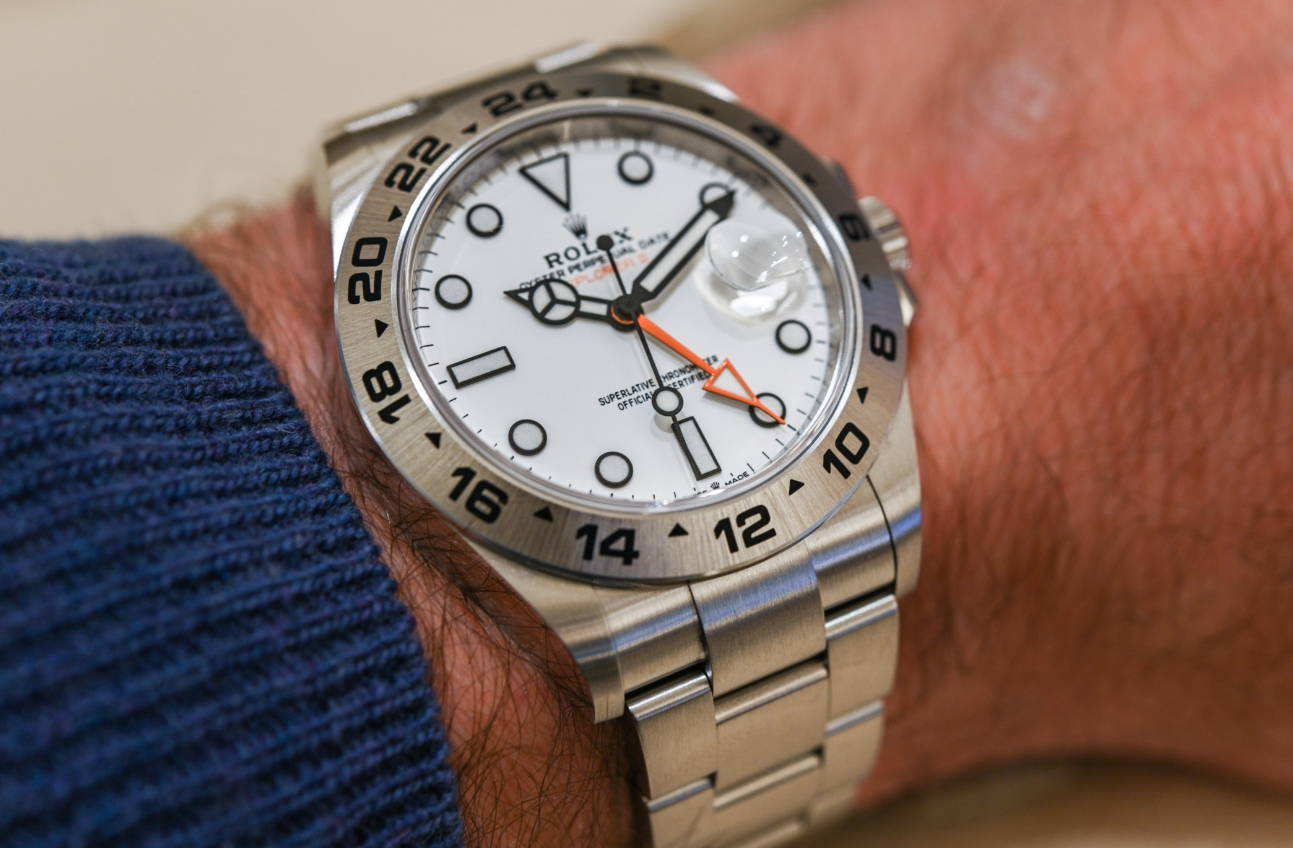
The upper surfaces of the genuine case are predominantly brushed, while the case sides provide a cleaner reflective contrast. On a replica, the boundary between those finishes should remain sharp around the lugs and crown guards. Soft edges, inconsistent brushing or unusually rounded lug tips can change the character of the watch even when the overall outline appears close.

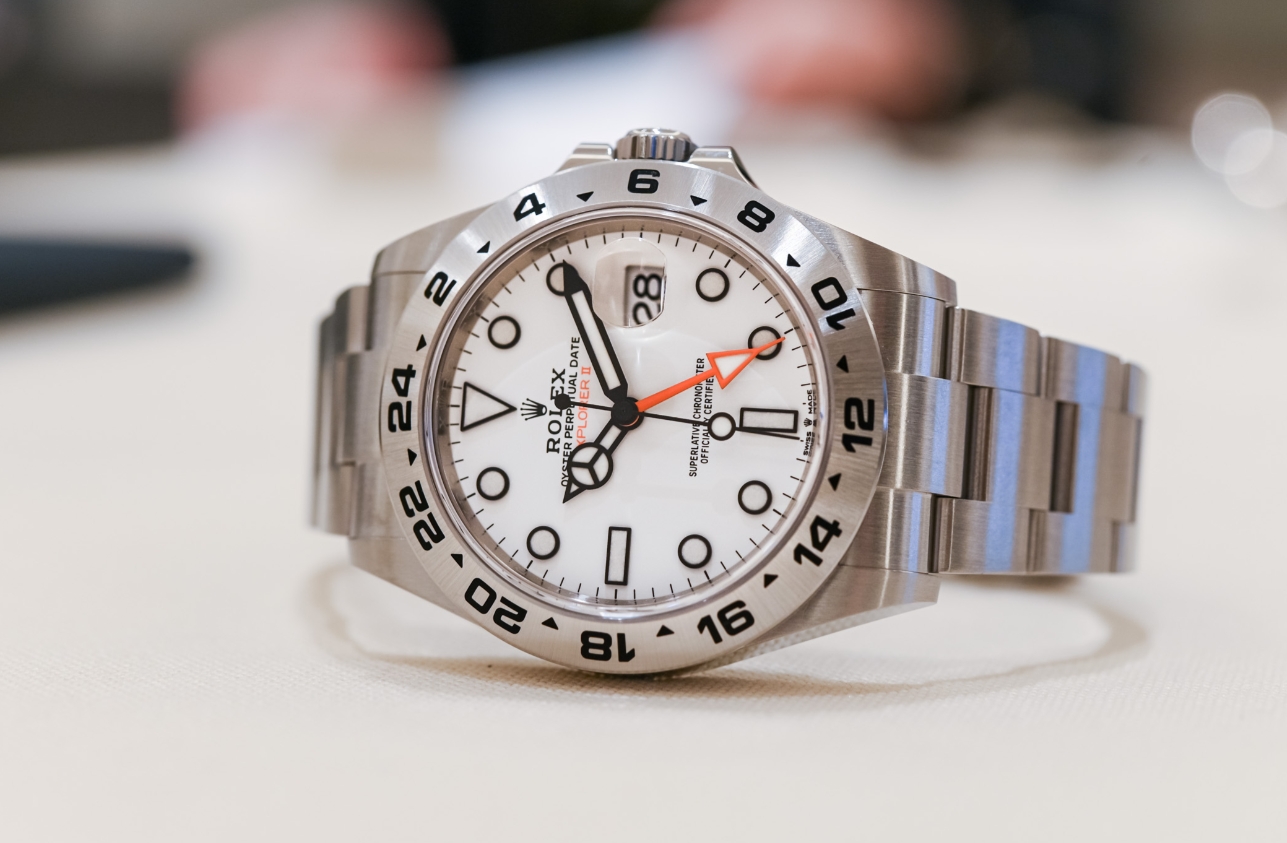
The white dial, often called the Polar configuration, depends on strong black outlines around the hands and hour markers. Those dark borders separate the luminous elements from the pale background and make the orange 24-hour hand more prominent. The effect should look crisp rather than heavy. If the outlines are too wide, the dial becomes crowded; if they are too thin or glossy, contrast weakens under direct light.

Important white dial Explorer II replica details include the thickness of the black marker surrounds, the shape of the hands, the position of the minute track and the spacing of the text above six o’clock. The luminous filling should remain even across the circles, rectangles and twelve o’clock triangle. The small coronet between “Swiss” and “Made” should sit centrally without touching the surrounding text.
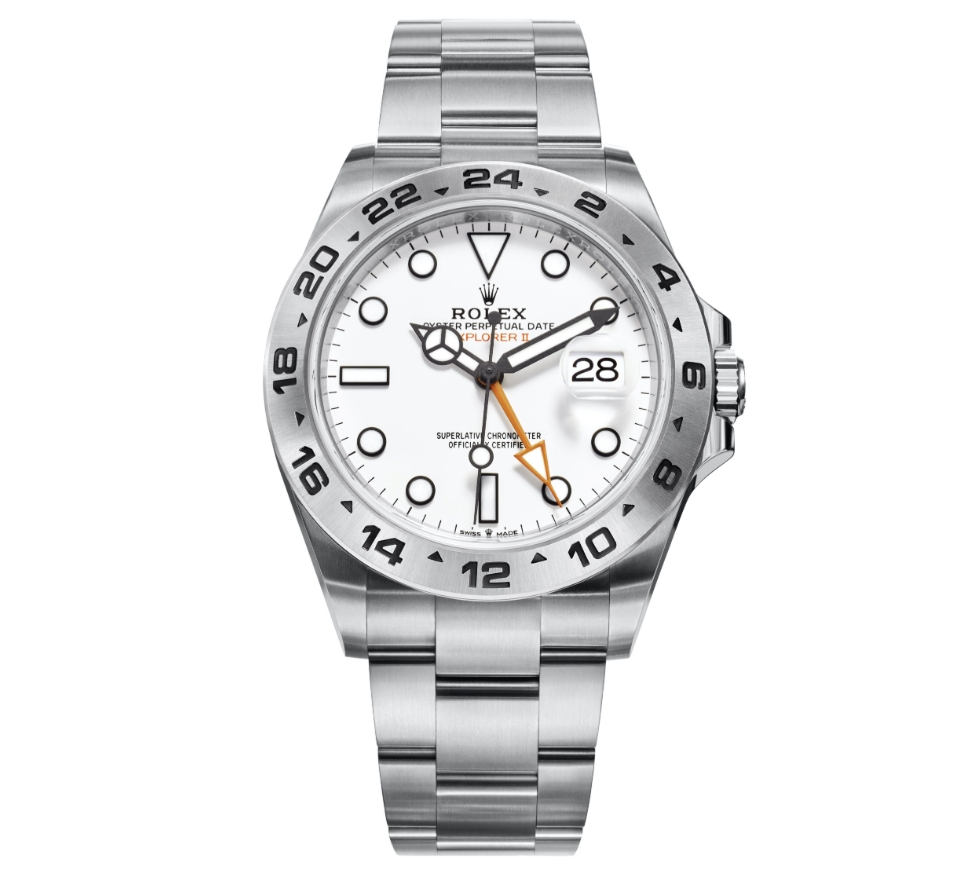
The black dial creates a different challenge. Its white luminous markers and hands must remain clearly separated from the dark surface without looking oversized. Reflections around the applied markers should not overwhelm the dial, and the orange hand needs enough saturation to remain visible. Assessing black dial Rolex Explorer II replica accuracy requires photographs taken under neutral light as well as bright studio light, since heavy editing can hide weak printing and uneven luminous material.
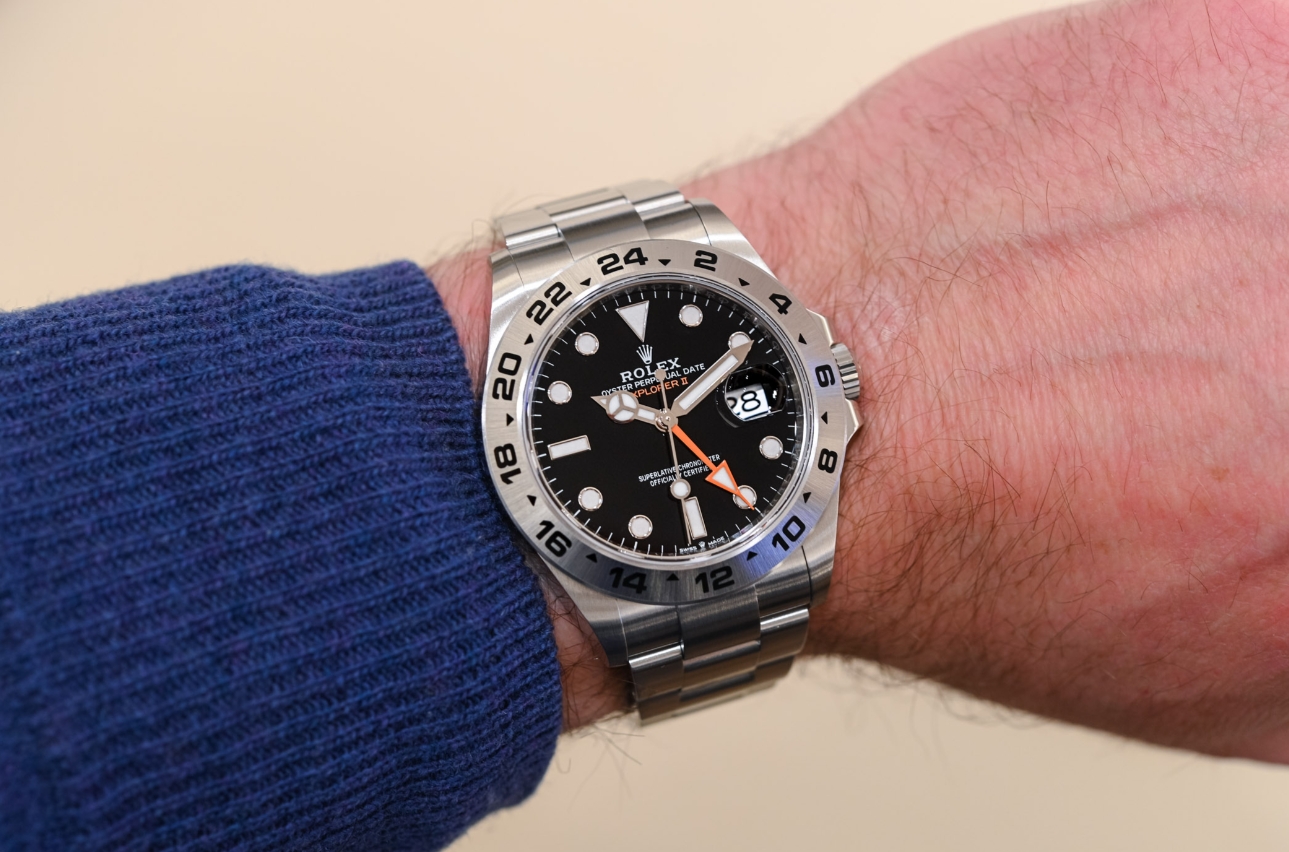
Both dials place the date at three o’clock beneath a Cyclops lens. The numeral should sit centrally in the aperture and remain readable from a normal viewing distance. Magnification is only part of the test. Lens position, date-wheel height, font weight and a clean date change all affect the result. Straight and angled photographs are useful because a misplaced lens may be less obvious in one carefully chosen view.

The Bracelet Movement and Performance Claims Need Evidence

The Oyster bracelet supports a watch of this size and should look proportionate from the lugs to the clasp. End links need to meet the case without large gaps or raised shoulders. The bracelet should then taper gradually, with consistent brushing across the broad link surfaces. A narrow bracelet or oversized clasp can make the 42 mm case look top-heavy even if the watch measures correctly.

The genuine reference uses an Oysterlock safety clasp and an Easylink extension that adds approximately 5 mm. A replica may imitate the external appearance without matching the internal construction. To judge Explorer II 226570 replica bracelet fit, ask for photographs of the clasp open and closed, a video of the extension operating and a wrist view that shows how the first links articulate. Sharp link edges and a stiff end link are difficult to identify from a flat product image.

Movement descriptions require a clear distinction between the genuine reference and the replica. Rolex equips the genuine 226570 with calibre 3285, which provides the GMT function and an official power reserve of approximately 70 hours. Those specifications establish the design benchmark; they do not identify the movement inside a replica described as “3285 style” or “3285 clone”.

A useful replica listing should name the actual movement, show the crown positions and demonstrate the local-hour adjustment, date change and 24-hour display. Measured timing and running time are more informative than a photograph of a decorated rotor. The Explorer II has a closed case back, so an unrelated movement image does not prove which calibre is fitted to the individual watch.

The same caution applies to precision certification and water resistance. Rolex specifies its own performance standards and rates the genuine Explorer II to 100 metres with a Twinlock screw-down crown. A replica does not inherit those results because its crown, dial or case resembles the original. Water resistance should be supported by a pressure test performed on the specific watch, while timing claims should come from a recent measurement.

Readers comparing generations and dial configurations can continue through our Rolex Explorer II replica watches section. Reference 226570 should remain distinct from the preceding 216570 even though the two share the same 42 mm diameter and broad visual formula. The newer watch is identified by a collection of subtle proportional, dial and movement changes rather than one dramatic redesign.

The most convincing Explorer II replica will therefore succeed as a complete design. Its brushed fixed bezel should frame the dial cleanly, the orange hand should correspond accurately with the 24-hour scale and the case should flow naturally into the bracelet. The white dial needs disciplined black outlines, while the black dial needs controlled reflections and clear luminous elements. Functional and performance claims should then be supported separately.

That approach produces a more useful assessment than repeating the genuine specification sheet or relying on broad quality labels. The 226570 is a watch of small relationships: bezel to dial, arrow hand to scale, lugs to bracelet and date lens to aperture. When those relationships remain consistent across several angles and the functions operate as described, the replica can be evaluated on evidence rather than marketing language.
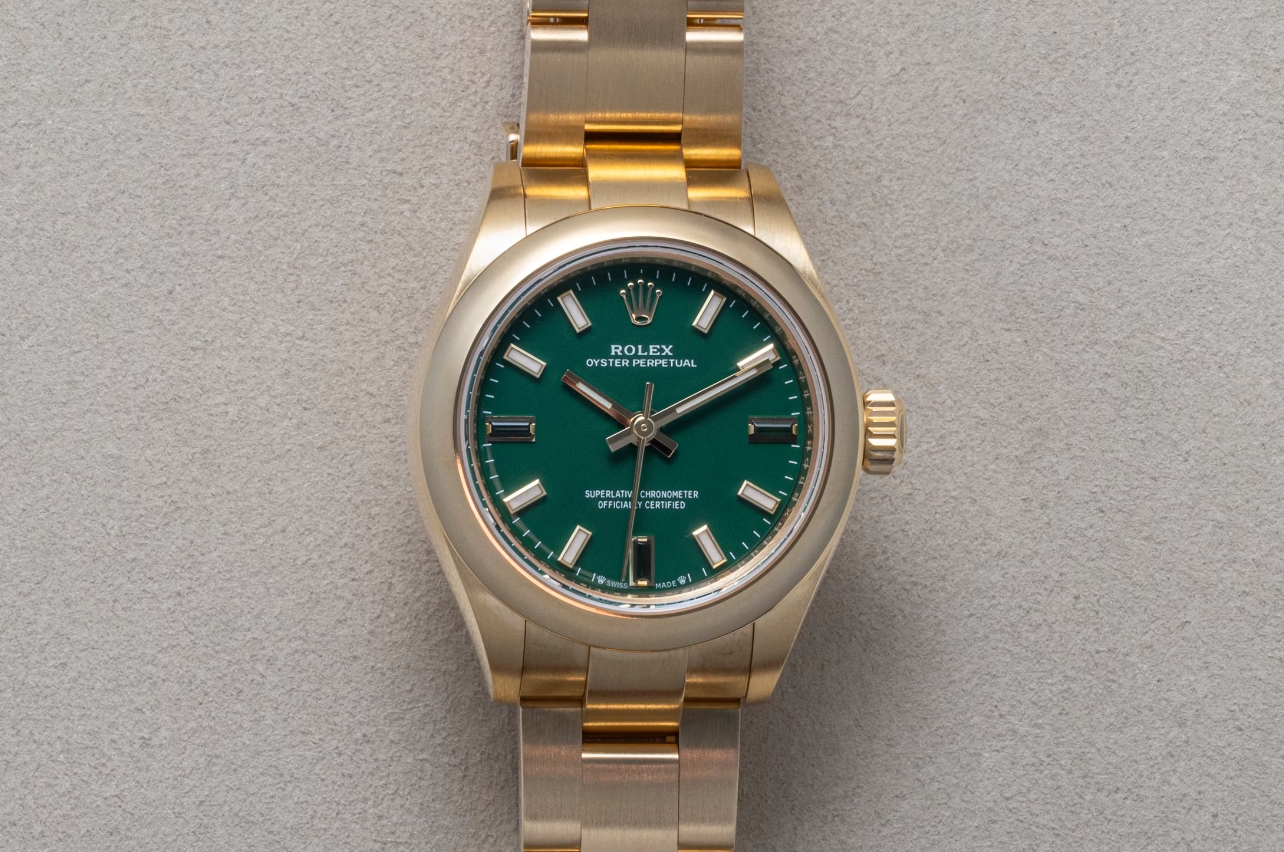
Gold Changes The Character Of The Rolex Oyster Perpetual Replica

The Oyster Perpetual has always relied on a small number of familiar elements: a smooth bezel, three central hands, clear hour markers and an Oyster bracelet. That simplicity makes the new gold versions more interesting than their specifications initially suggest. Changing the metal alters the colour, weight and reflections of the whole watch, yet the design still has to retain the restraint associated with the collection.

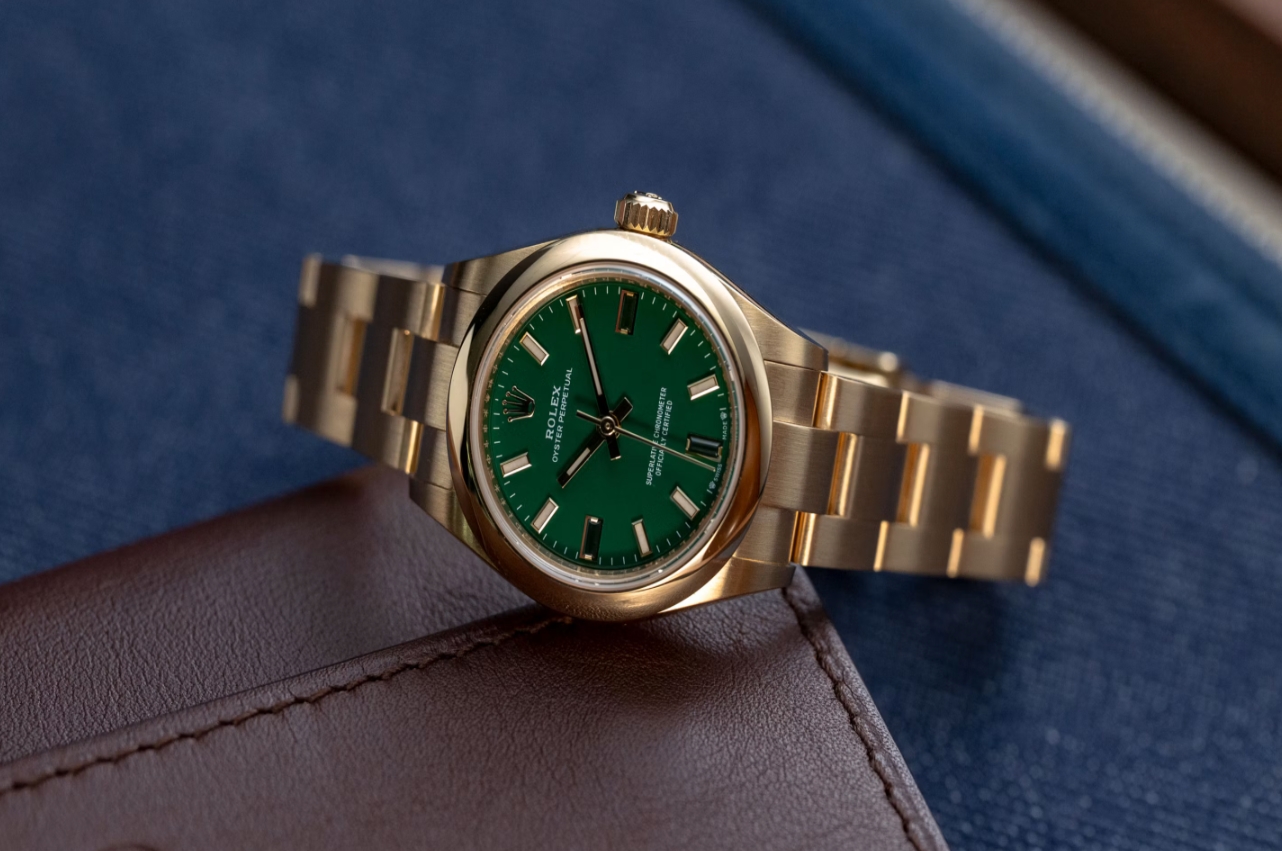
Angled Rolex Oyster Perpetual 28 replica with green dial and yellow gold colour

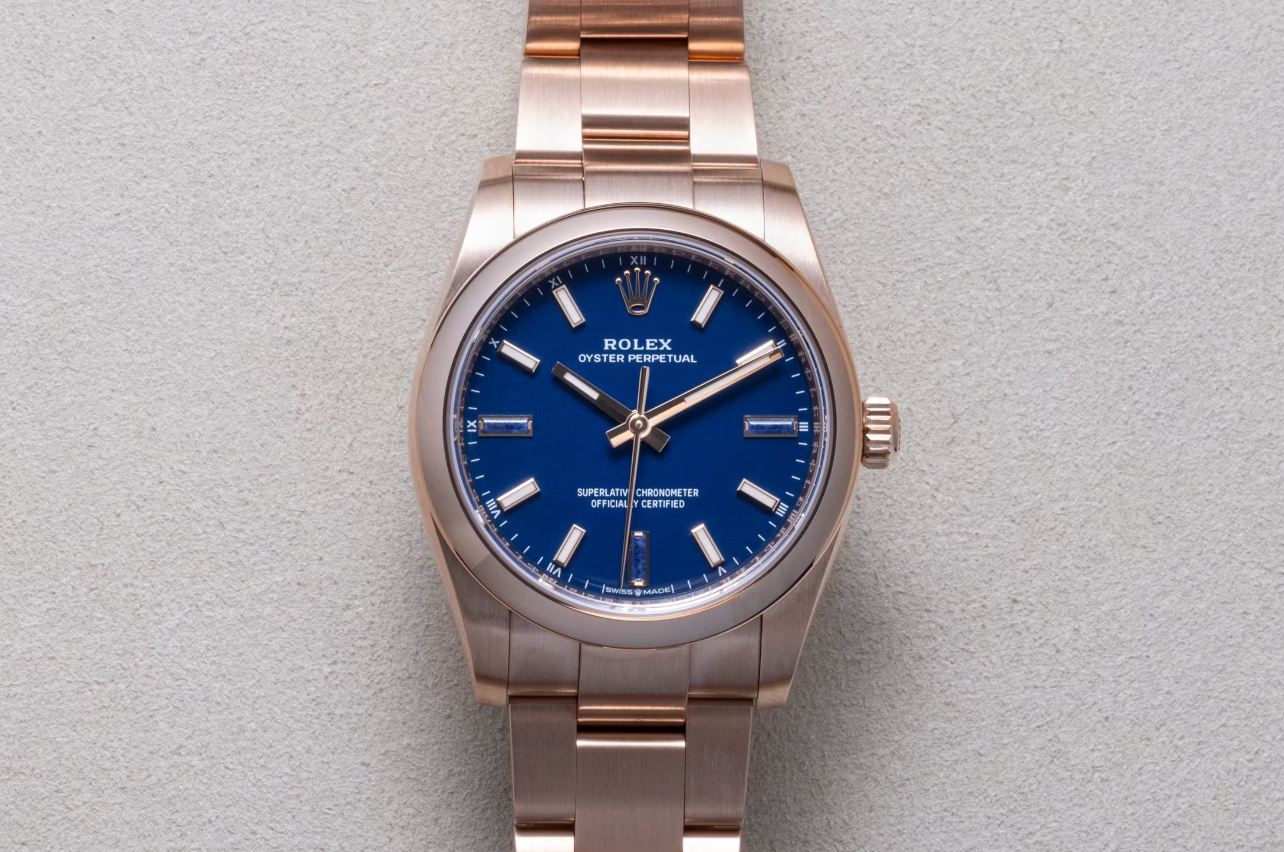
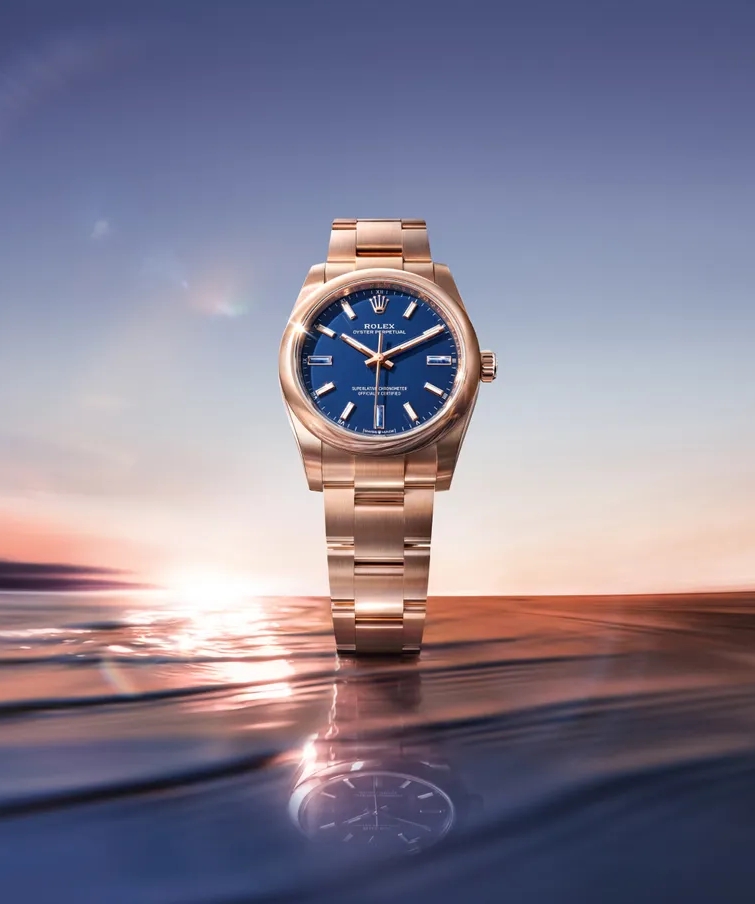
Rolex introduced the 34 mm reference 124205 in Everose gold and the 28 mm reference 276208 in yellow gold for the centenary of the Oyster in 2026. The launch examples paired the larger case with a blue stone lacquer dial and the smaller case with a green stone lacquer dial. Both used natural stone hour markers at three, six and nine o’clock, bringing texture to a dial that would otherwise remain extremely simple.

For readers comparing Rolex replica watches, the important point is not merely that these models look more expensive than the familiar steel Oyster Perpetual. Their character depends on the relationship between a predominantly satin-finished gold case and bracelet, a polished domed bezel and a glossy lacquer dial. If any one of those surfaces is handled incorrectly, the watch can become much louder and less balanced than the genuine design.

A thoughtful assessment of a Rolex Oyster Perpetual gold replica should therefore begin with visible proportions and finishing. Photographs can help establish colour, brushing direction, dial alignment and bracelet fit. They cannot confirm that a case is solid 18 ct gold, that a particular movement is installed or that the watch has passed a water-resistance test. Those claims require separate evidence.

The 34 mm and 28 mm Models Have Different Personalities

The two references share the same basic Oyster Perpetual layout, but the six-millimetre difference in diameter changes how that layout is read. The 34 mm version leaves more open space around the hands and markers. Its Everose colour also creates a softer transition into the blue dial than bright yellow gold would. The result is compact without looking miniature, which makes the case, bezel and bracelet proportions especially important on a replica.

Front view of a Rolex Oyster Perpetual 34 replica with blue dial and Everose gold colour

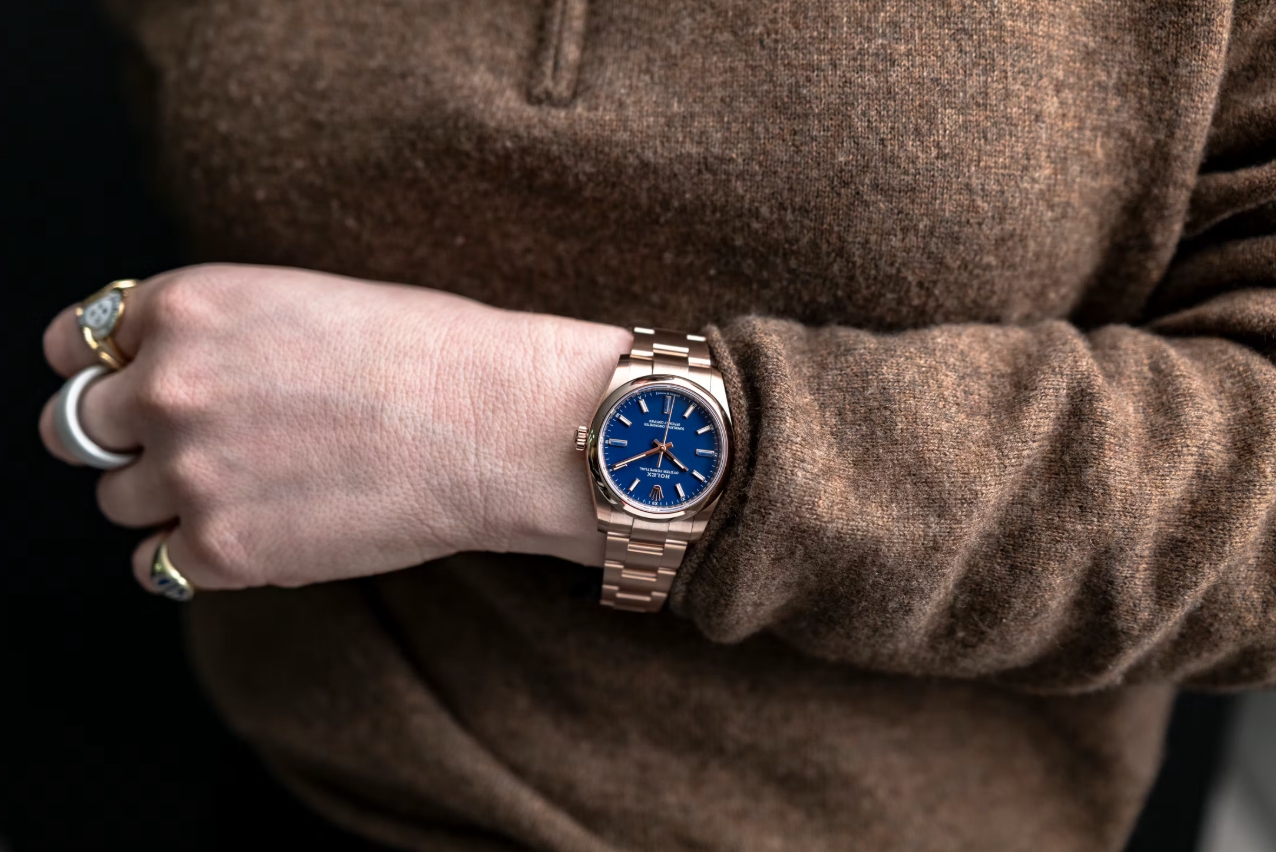
When examining a Rolex Oyster Perpetual 34mm replica, look beyond the stated diameter. The width of the domed bezel controls the apparent size of the dial, while the lug length determines how much wrist space the watch occupies. An oversized dial opening can make the bezel look weak. Thick lugs or end links that sit too low can make a modest case appear heavier than it should. A straight photograph and a side view are both needed to understand the full shape.

Rolex Oyster Perpetual 34 replica with blue dial shown on the wrist

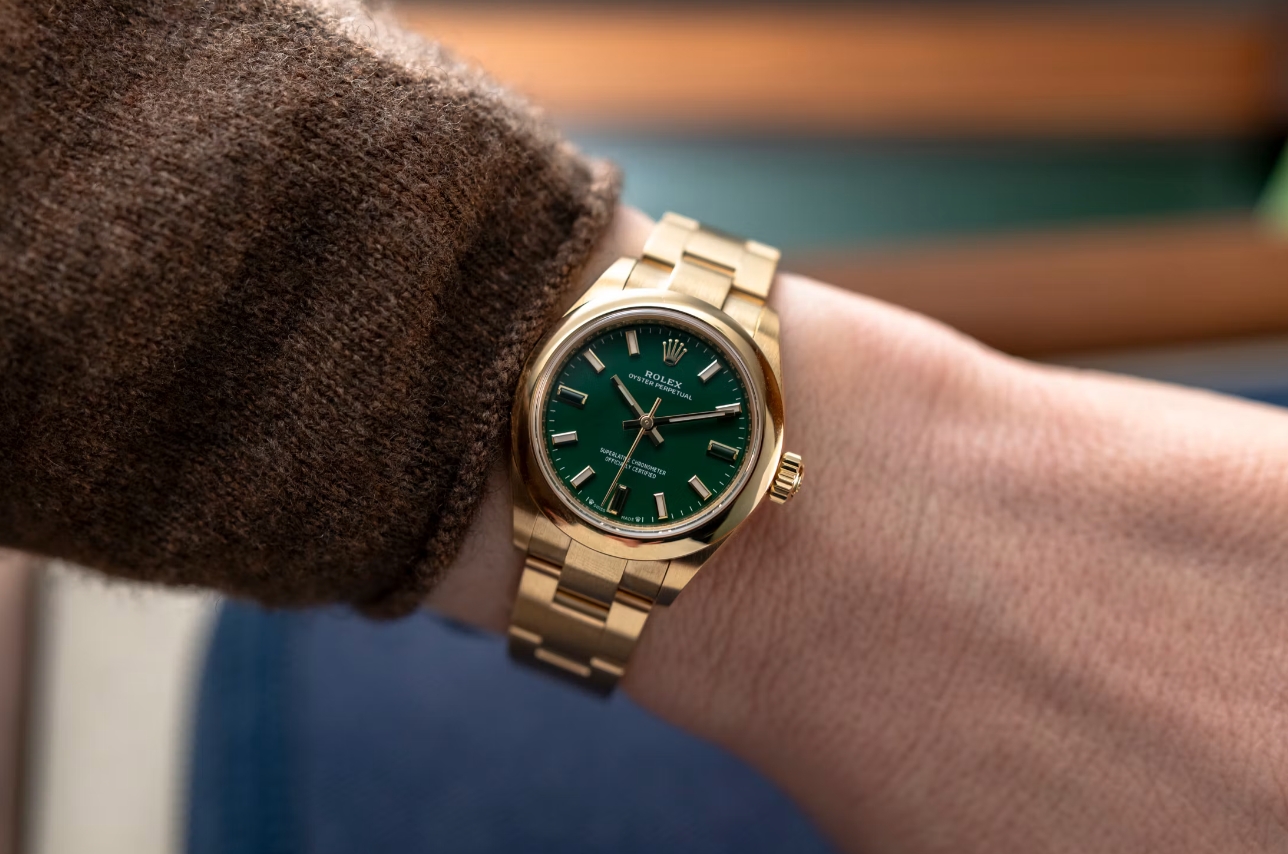
The 28 mm reference is more concentrated. Its yellow-gold case surrounds a smaller dial, so the hands, markers and coronet occupy a greater share of the available surface. Small errors become easier to notice because the printing and applied components sit closer together. The watch should still feel clear rather than crowded.

Front view of a Rolex Oyster Perpetual 28 replica with green dial and gold bracelet

A Rolex Oyster Perpetual 28mm replica is best judged from a close, undistorted front image followed by a normal wrist photograph. Macro photography can make a small watch appear much larger and can exaggerate tiny finishing marks. The wrist view explains whether the case and bracelet retain the compact character that separates the 28 mm model from the 34 mm version.

Rolex Oyster Perpetual 28 replica with green dial shown on the wrist

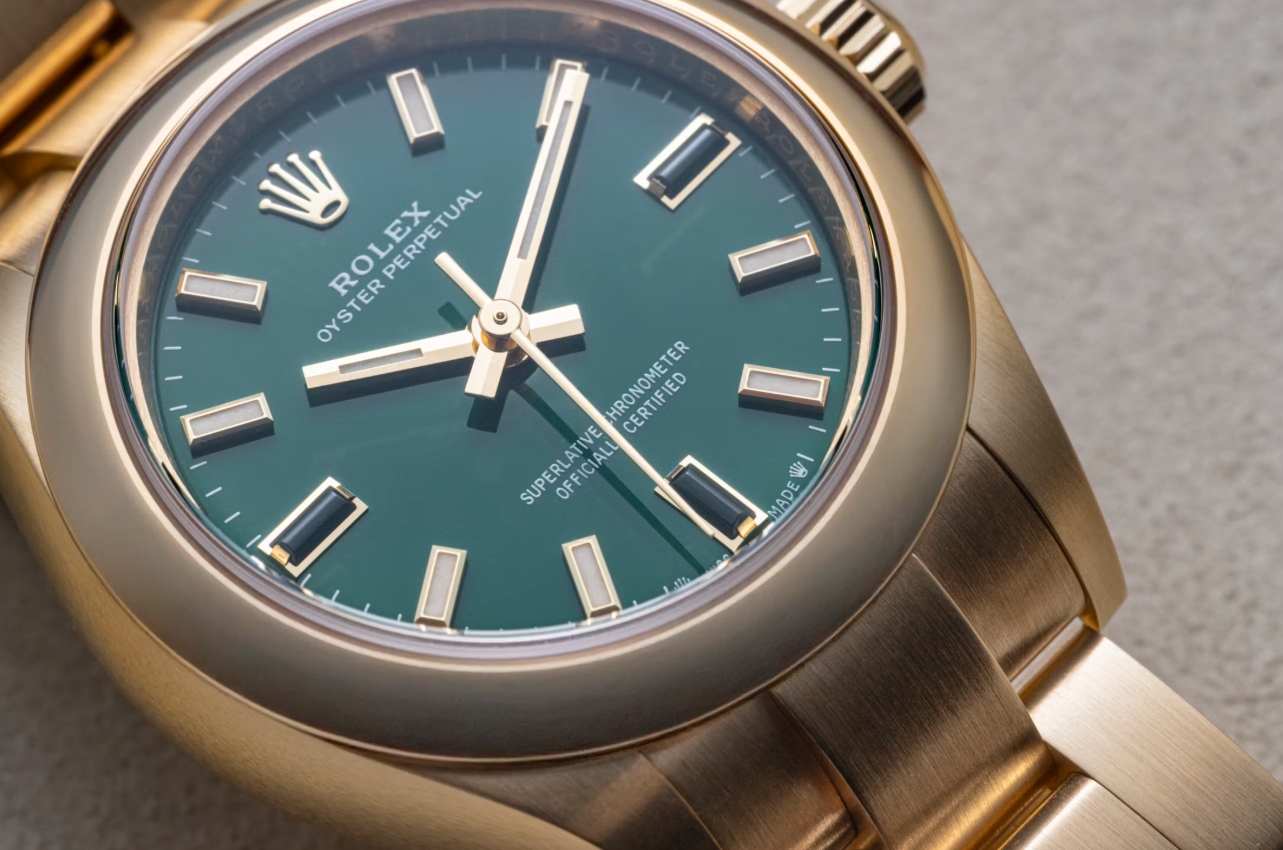
The launch dials add another layer of difficulty. On the genuine blue 34 mm configuration, dumortierite is used at three, six and nine o’clock. The green 28 mm configuration uses heliotrope in the same positions. Natural stone varies in colour and pattern, so the markers are not supposed to look like three identical pieces of printed material. Their cut, alignment and surface texture should remain consistent enough to work as a set while retaining some natural variation.

Close view of the green dial and hour markers on a Rolex Oyster Perpetual 28 replica

Replica descriptions should be precise about what is being reproduced. Coloured markers that resemble stone are not evidence that natural dumortierite or heliotrope has been used. A useful listing should identify the actual marker material and provide close photographs taken without aggressive colour enhancement. This is particularly relevant to gold Oyster Perpetual replica dial details, because saturated editing can make an ordinary blue or green coating appear deeper and more textured than it is.

The hour markers that are not made from stone carry luminous material on the genuine models. Their surrounds should have even edges, and the luminous filling should sit cleanly inside each marker. The hands need to correspond in colour with the surrounding metal while remaining distinct against the dial. Check the length of the minute hand, the centring of the coronet and the spacing of the printed text. On such a simple dial, small alignment errors affect the entire face.

Reference numbers also need context. The 124205 and 276208 are available with more than one dial, so the reference alone does not prove that a watch should have the blue or green launch configuration. A black, brown, turquoise or mother-of-pearl dial may belong to the same broader gold reference family, depending on the size and configuration. The article and image ALT text should describe the dial actually shown rather than treating one colour as the only version of the reference.

Gold Colour Surface Finish and Bracelet Fit

The most distinctive part of these watches is the way Rolex treats the precious metal. The main surfaces of the genuine case and bracelet are satin finished, while the domed bezel is polished. That contrast keeps the watch from becoming a single uninterrupted field of shine. The bezel catches direct light around the dial, while the brushed case and bracelet reflect light more softly.

This contrast should be examined under more than one lighting condition. A replica can look convincing in warm studio light but turn noticeably orange, pink or pale in daylight. Everose and yellow gold should also remain distinct from each other. The 34 mm model needs the warmer pink tone associated with Everose, while the 28 mm version should read as yellow gold without a green cast or an excessively bright plated appearance.

Look closely at the borders between finishes. The top of the lugs and the broad bracelet links should show an even grain, while the polished bezel should have a clean reflective edge. Brushing that runs in several directions or fades near the case can make the watch look roughly refinished. A material description such as plated steel, wrapped gold or solid gold should be supported by specific information rather than inferred from colour.

The Oyster bracelet is central to both references. On the genuine watches it uses broad three-piece links, an Oysterclasp and an Easylink comfort extension. The gold versions also use internal ceramic inserts around the bracelet pins to reduce wear. A replica bracelet may imitate the external shape without using the same internal construction, so photographs of the open clasp and link sides are more useful than a front view alone.

Good Rolex Oyster Perpetual replica bracelet proportions require a clean meeting point between the end links and case, a natural taper toward the clasp and enough articulation for the bracelet to curve around the wrist. This matters even more on the 28 mm version, where an oversized clasp or heavy end links can dominate the smaller case. On the 34 mm model, the bracelet should support the watch without making it look wider than the dial and bezel combination allows.

The movement needs similar care in the description. Rolex equips the genuine 28 mm and 34 mm models with calibre 2232, a self-winding movement with an approximate 55-hour power reserve. That specification establishes the original design; it does not identify the mechanism inside a replica. A seller or reviewer should give the actual movement name, a measured running time and timing results for the watch being discussed. The closed case back means that an unrelated movement image proves very little.

Rolex also rates the genuine watches to 100 metres and equips them with a Twinlock screw-down crown. A replica should not inherit that rating from its appearance. If water resistance matters, the individual watch needs a pressure test. The same principle applies to metal content and overall weight: measurements and documentation carry more value than descriptive labels.

Readers can compare other sizes, dial colours and case materials in our Rolex Oyster Perpetual replica watches section. These gold 34 mm and 28 mm references deserve their own place within that collection because their interest comes from finish and proportion rather than extra functions.

The strongest replica interpretation will preserve that restraint. The gold colour should remain believable in different light, the satin surfaces should contrast with the polished bezel and the stone-style markers should be accurately identified. The 34 mm watch needs enough openness around its dial, while the 28 mm model needs precision in a much tighter space. Those details explain the design far better than simply calling either watch a solid-gold Oyster Perpetual.

The Black Dial Balance Of The Rolex Submariner 126610LN Replica

The Submariner 126610LN is easy to recognise and surprisingly difficult to reproduce well. Its black dial, black timing bezel and brushed steel bracelet leave very little visual noise. When the shape of a lug, the position of the date or the finish of a bracelet link is wrong, the error has nowhere to hide.

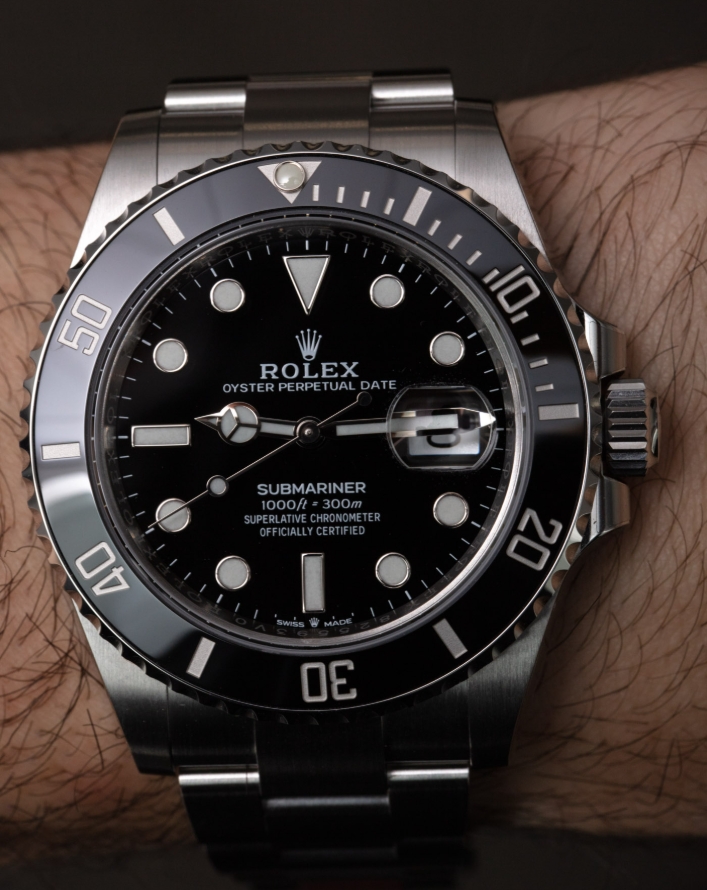
The supplied wrist photographs show why the model has remained so familiar. From a distance, the watch reads as a simple black and steel sports design. Move closer and the result depends on a series of small relationships: the width of the bezel against the dial, the length of the hands, the shape of the crown guards and the way the first bracelet links leave the case. Readers comparing Rolex replica watches will learn more from those visible relationships than from labels such as premium, top grade or perfect copy.

Front view of a Rolex Submariner 126610LN replica with black dial and bezel

A useful assessment of a Rolex Submariner 126610LN replica watch should therefore separate appearance from claims that require testing. Photographs can help us judge alignment, proportions and surface finish. They cannot confirm the steel alloy, movement construction, timing performance or water resistance. Keeping that distinction clear makes the article more useful and prevents the genuine watch’s specifications from being presented as automatic features of a replica.

The Case Dial and Bezel Need to Agree

Rolex introduced reference 126610LN in 2020 as the successor to the 40 mm 116610LN. The genuine watch moved to a 41 mm case, but the change was not simply a larger circle around the same dial. The lugs became more tapered, the bracelet gained greater visual presence where it meets the case and the overall outline looked less block-like than the previous generation.

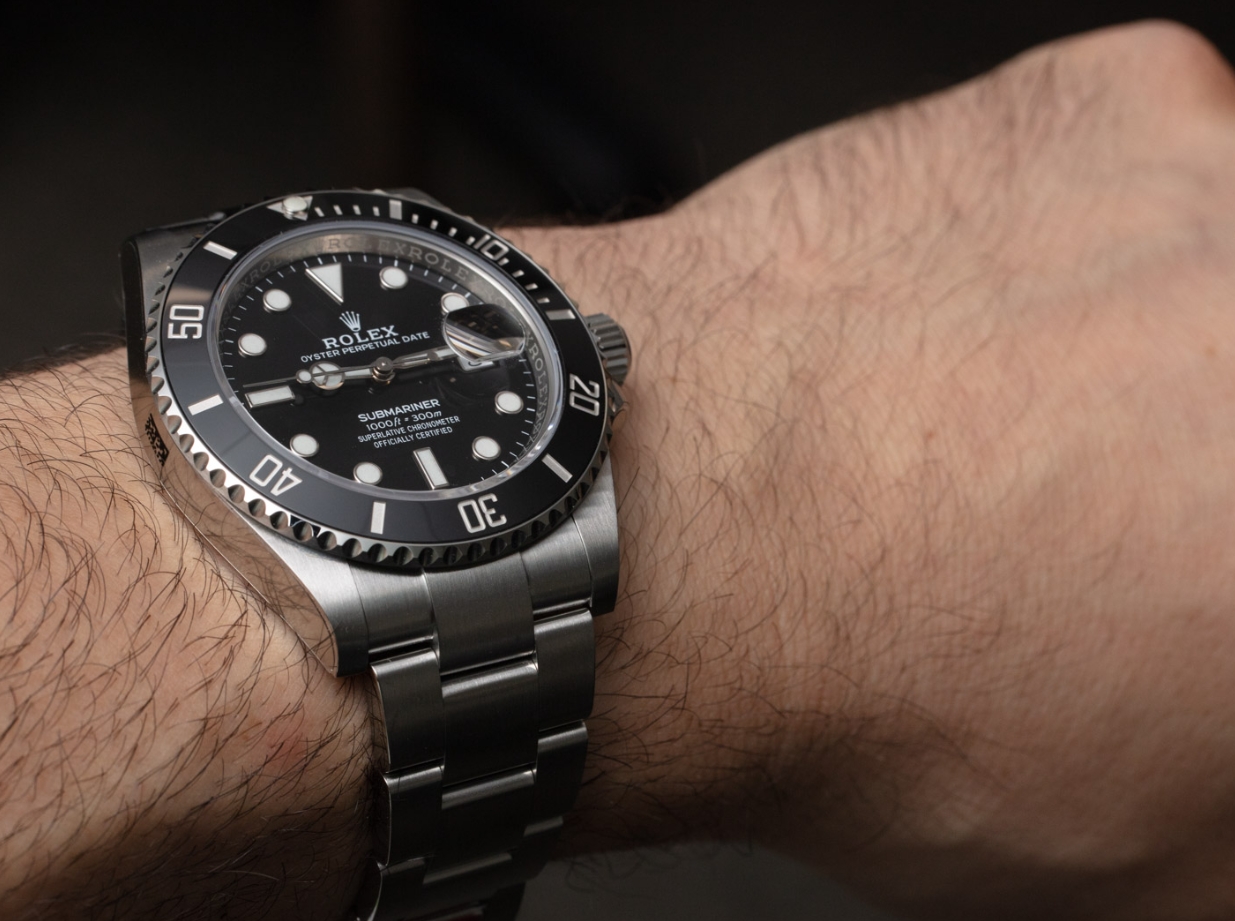
That balance is visible in the wider wrist photograph. The case occupies a clear area of the wrist without allowing the lugs to extend too far beyond it. The bracelet immediately begins to curve downward, helping the watch look integrated rather than balanced on top of the arm. This is why 41 mm Rolex Submariner replica proportions should be judged on the wrist as well as in a straight product photograph. Diameter alone says little about how the watch actually sits.

Full wrist view showing the proportions of a Rolex Submariner 126610LN replica

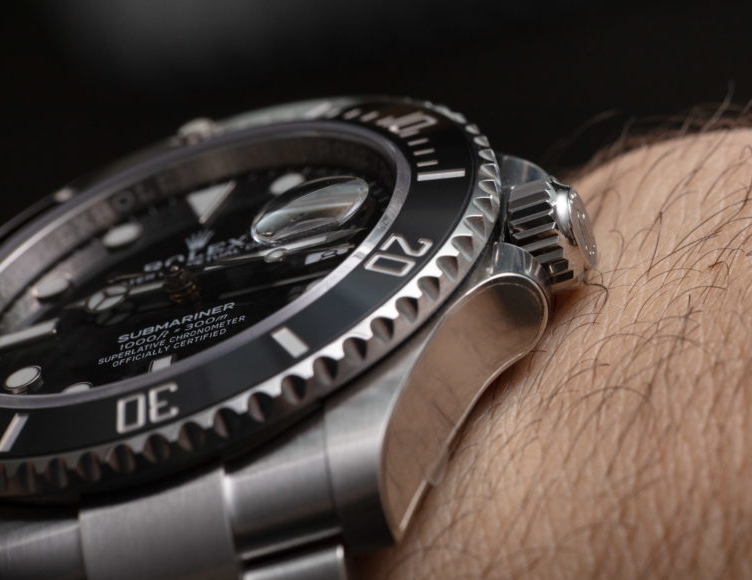
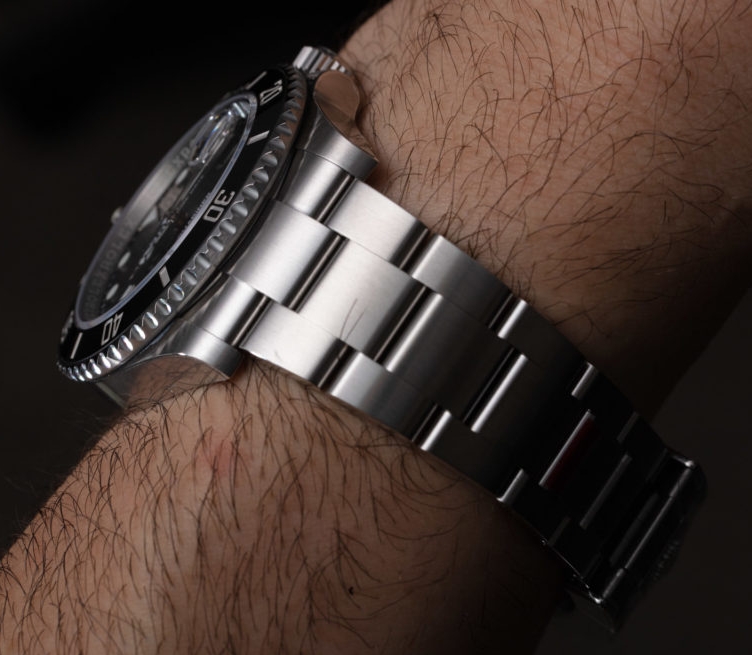
The low-angle photograph provides a more demanding test. It shows the height of the crystal, the edge of the bezel, the case band and the transition into the crown guards. A replica can look convincing from directly above while appearing too tall from this position. The polished case side should also form a clean contrast with the brushed upper surfaces. Soft boundaries or excessively rounded edges can make the case look as though it has already been heavily refinished.

Close side view of the Rolex Submariner 126610LN replica bezel and case profile

The genuine 126610LN uses a unidirectional bezel with a black ceramic Cerachrom insert. Its recessed numerals and graduations are coated with platinum, and the zero triangle contains a luminous capsule. A replica may reproduce the colour and layout without using the same materials or process, so appearance should be described as appearance. In the photographs, the most useful checkpoints are the depth and consistency of the numerals, the centring of the luminous pip and the alignment between the bezel triangle and the twelve o’clock dial marker.

Bezel action cannot be assessed from these images. A clear, unedited video is needed to show whether the bezel has sideways play, whether each click feels consistent and whether it returns to the correct alignment. This is a good example of where a detailed photograph helps without answering every question.

The dial works in much the same way. Large circles, rectangles at six and nine, and a triangle at twelve create the familiar Submariner layout. The Mercedes hour hand should be clearly shorter than the minute hand, while the minute hand needs to reach naturally toward the minute track. The supplied close views also make it possible to compare marker surrounds, luminous filling, coronet size and the spacing of the text above six o’clock. These black dial Submariner replica details matter because the design is too clean to distract from uneven printing or a poorly finished central pinion.

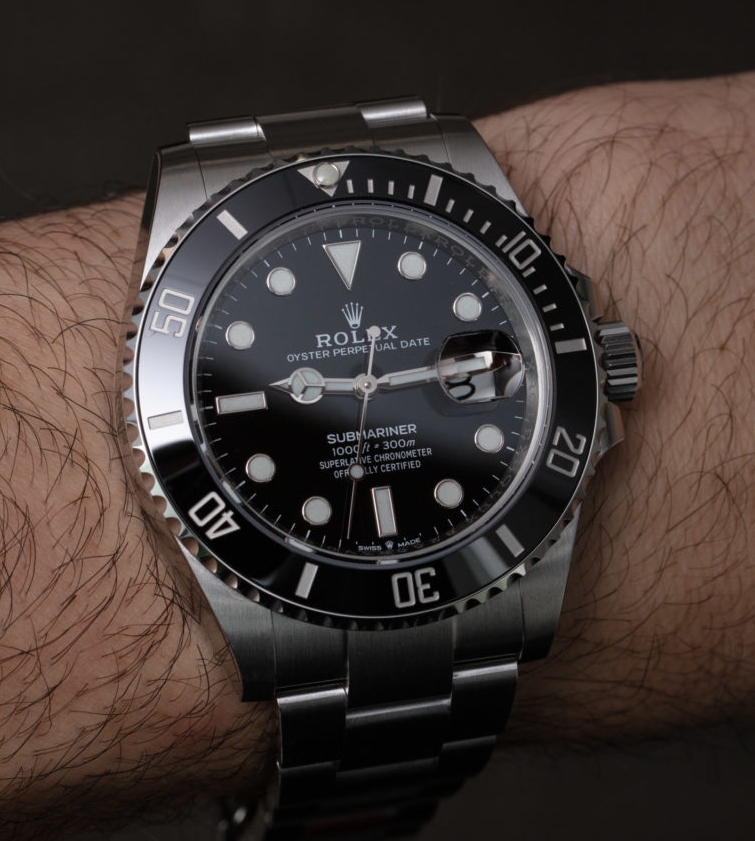
The date window adds another visual test. It should sit centrally beneath the Cyclops lens, and the numeral should not appear too high or too low inside the aperture. The angled wrist photograph is particularly useful here because reflections reveal the position of the lens and the curve of the crystal more clearly than a flat catalogue image. Strong magnification alone is not enough; lens placement, numeral weight and a clean date change all contribute to Rolex Submariner replica bezel and date alignment.

Angled wrist view of a Rolex Submariner 126610LN replica showing the date lens

The Bracelet Movement and Claims Behind the Watch

The Oyster bracelet is not a secondary detail on this reference. Its broad brushed centre links continue the functional appearance of the case, while its taper prevents the lower half of the watch from feeling unnecessarily heavy. In the rear three-quarter photograph, the links follow the wrist without an abrupt gap at the end link. It is also possible to see how the brushed surfaces respond to light and whether the finishing direction remains consistent from one link to the next.

Side wrist view of the Rolex Submariner 126610LN replica Oyster bracelet

Real comfort still cannot be established from a photograph. Link edges, clasp weight, articulation and the stiffness of the first link become apparent only when the watch is handled. Anyone comparing Submariner 126610LN replica bracelet fit should ask for a wrist video as well as photographs of the clasp open and closed. The adjustment mechanism should be shown operating rather than merely described as equivalent to the genuine Glidelock system.

Movement descriptions deserve the same care. The genuine 126610LN contains Rolex calibre 3235 and has an official power reserve of approximately 70 hours. Those facts identify the original reference; they do not reveal what is inside a replica. The term “3235 clone” is used for movements with different architectures and parts, so a useful description should give the actual movement designation, a measured power reserve and recent timing results. Because the Submariner has a closed case back, a generic movement photograph is not evidence of the mechanism fitted to a specific watch.

Water resistance is another area where borrowed specifications create confusion. Rolex rates the genuine model to 300 metres, but a screw-down crown on a replica does not establish the same performance. Seals, crystal fitting, case tolerances and assembly all affect the result. If the watch will be exposed to water, the sensible evidence is a pressure test performed on that individual piece.

Material claims also need more than a polished photograph. Rolex uses Oystersteel from the 904L steel family for the genuine reference. A replica listing should identify its own case and bracelet material rather than repeating that wording without documentation. The images can still reveal the quality of the visible finishing: look at the boundary between the brushed lug tops and polished sides, the consistency of the bracelet grain and the fit of the end links.

Readers comparing other references can continue through our Rolex Submariner replica watches section. The black 126610LN should remain separate from the green-bezel 126610LV and the no-date 124060. Its identity comes from the combination of the black dial, black timing bezel, date display and revised 41 mm generation.

The five wrist photographs make this article more useful because they show the same watch at different distances and angles. The straight view explains the dial, the wider image establishes scale, the low angle reveals case height, the bracelet view shows articulation and the final angled view brings the date lens into focus. Together they provide a better basis for judging the replica than a long list of unverified specifications.

A convincing 126610LN replica should look coherent across all of those views. The dial must sit naturally within the bezel, the case must flow into the bracelet and the date should remain centred as the viewing angle changes. Movement, material and water-resistance claims then need evidence of their own. That approach gives readers something more valuable than exaggerated quality labels: a clear way to understand what the photographs show and what they still cannot prove.

The Green Ombré Dial Changes The Rolex Datejust 41 Replica

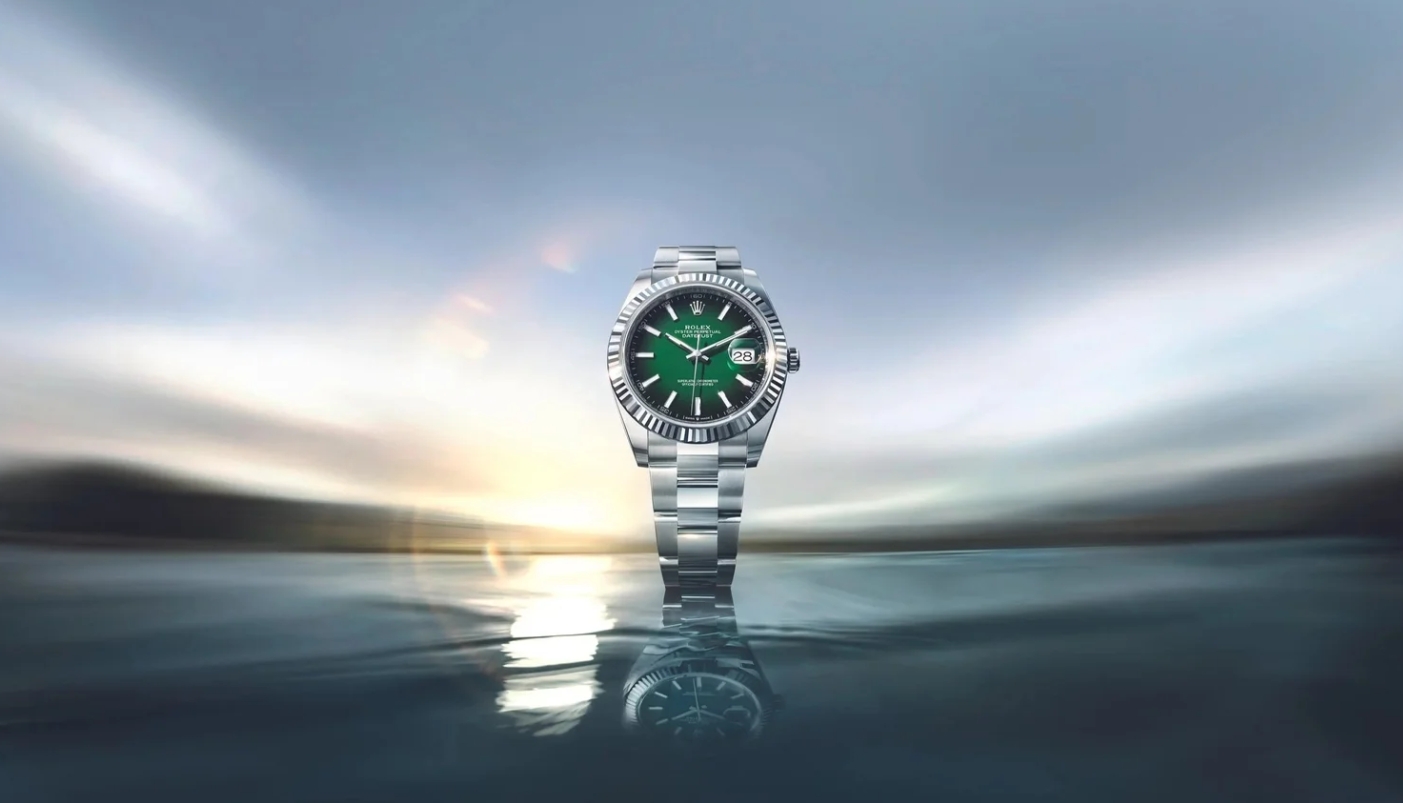
The Datejust has always relied on proportion rather than novelty. Its date window, fluted bezel and metal bracelet are so familiar that a new colour can seem like a modest change. The green ombré dial alters more than expected, however. Its centre remains bright and saturated while the outer edge fades towards black, making the bezel appear sharper and the 41mm case slightly more compact.

For readers comparing Rolex replica watches, that change makes this an unusually revealing Datejust. A convincing Rolex Datejust 41 replica with green ombré dial needs to reproduce a gradual transition, clean printing and balanced case proportions at the same time. Getting the colour roughly right is only the beginning.

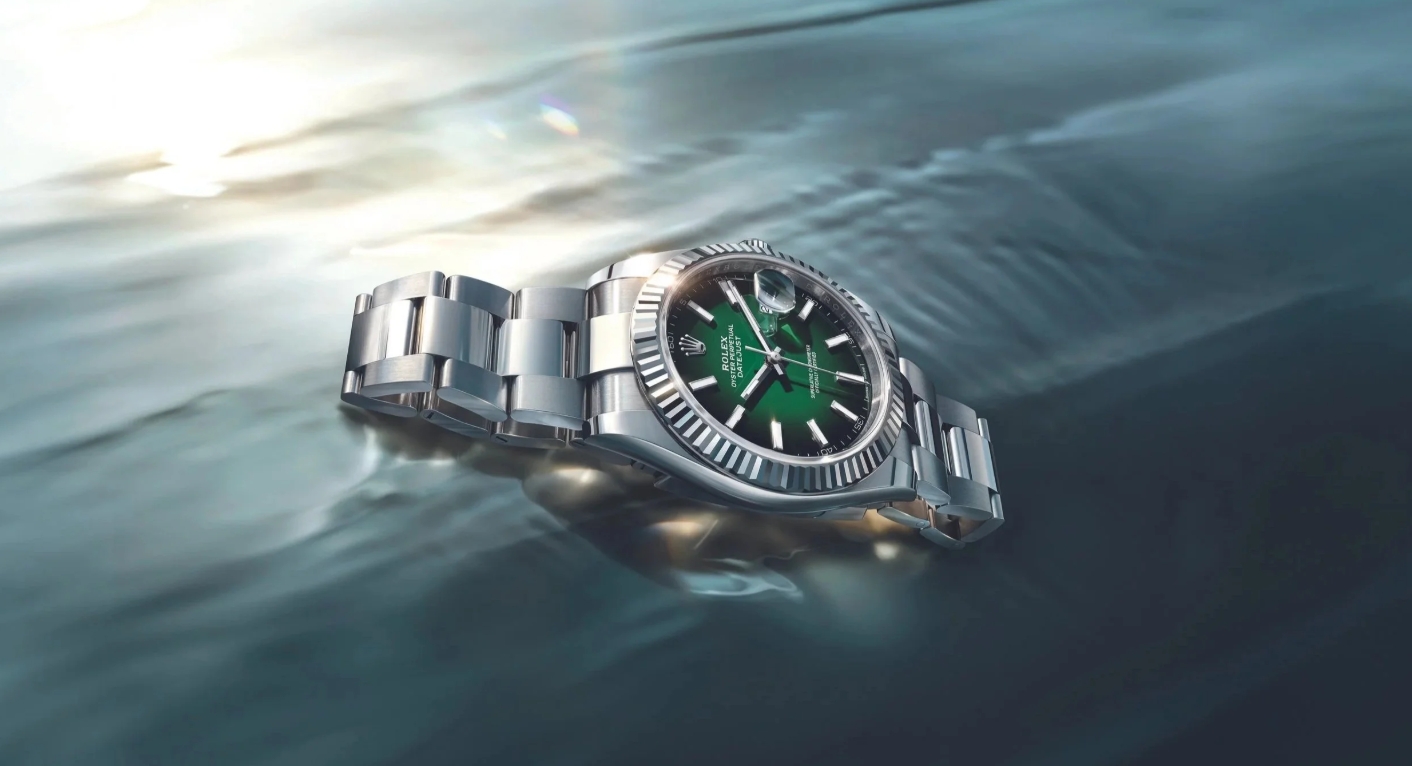
The genuine 2026 watch provides the visual reference. Rolex applies green lacquer to the dial base and creates the darker perimeter by spraying black lacquer in concentric movements. The white inscriptions and Chromalight hour markers sit above that gradient. A replica may use a different coating process, so the finished appearance should be assessed on its own rather than described automatically with the same manufacturing claims.

Angled Rolex Datejust 41 replica with green ombre dial beside moving water

The Gradient Must Look Natural Beyond Studio Lighting

An ombré dial depends on the distance over which one colour becomes another. If the black begins too close to the centre, the face can look small and almost vignetted. If it appears only at the extreme edge, the watch reads as a standard green Datejust with a dark chapter ring. The most convincing result keeps a clearly green centre while allowing the transition to become visible before it reaches the hour markers.

This is why a single bright product photograph is not enough for a green dial Datejust 41 replica. Strong frontal light can wash out the darker perimeter and make an uneven surface appear smooth. A second photograph taken at an angle should show whether the lacquer retains depth, whether reflections move evenly across the dial and whether the black edge remains symmetrical around the full circumference.

Colour accuracy is harder to judge than it first appears. Cameras often lift shadows and increase saturation, while warm indoor lighting can push green towards olive. The dial should therefore be photographed beside the case and bracelet under neutral light. That keeps the comparison grounded in one image instead of asking readers to compare colours taken with different cameras or editing settings.

The applied markers also influence the gradient. If they are too wide or their polished borders are heavy, they interrupt the transition and make the dial appear busier. Their placement should follow the minute track evenly, with enough space around the date window at 3 o’clock. The Cyclops lens needs to sit centrally over the aperture because even a slight offset becomes obvious against such a simple layout.

The hands deserve similar attention. Their length should relate properly to the hour markers and minute track, while the seconds hand should reach far enough towards the outer scale. A dial can have an attractive colour and still feel wrong if the hands are short, the central stack sits too high or the luminous material differs noticeably from the markers.

Front view of Rolex Datejust 41 replica with green ombre dial and metal bracelet

The Bezel and Bracelet Decide How Formal It Feels

The genuine white Rolesor configuration combines an Oystersteel case with a white gold fluted bezel. Rolesor describes that combination of metals on the authentic watch; it is not a generic name for any silver-coloured Datejust. A white Rolesor Datejust 41 replica may reproduce the colour contrast without using white gold, so the actual bezel material and surface treatment should be stated separately.

Fluting is one of the easiest Datejust details to recognise and one of the hardest to reproduce cleanly. The grooves should remain consistent in depth and spacing around the full bezel. Coarse teeth make the watch appear more aggressive, while shallow fluting loses definition as soon as the light softens. The polished tops and darker recesses need to work together without making the bezel look wider than it should.

The width of the bezel also changes how the 41mm case is perceived. A broad ring reduces the apparent dial opening and exaggerates the case, while a thin bezel can make the face look oversized. This relationship is more useful than a diameter printed in a listing. A straight photograph reveals symmetry, but an oblique view is needed to judge bezel height, crystal profile and the transition into the lugs.

Bracelet descriptions require particular care with this release. Rolex’s presentation of the new white Rolesor version uses an Oyster bracelet, while current catalogue configurations also pair the green ombré dial with a Jubilee bracelet. The dial alone therefore does not establish the exact configuration. A replica article should identify the bracelet shown and avoid combining specifications from two different references.

The Oyster bracelet gives the watch a straighter, more contemporary profile through its three-piece links. The five-piece Jubilee creates more reflections and pushes the Datejust towards its traditional dressier character. Neither is automatically the stronger choice. For a Rolex Datejust 41 replica for everyday wear, link articulation, end-link fit, clasp alignment and sizing options matter more than the bracelet name printed in the listing.

A useful bracelet photograph should show the first links leaving the case rather than hiding them beneath the watch head. Uneven gaps, stiff articulation or end links sitting above the lugs can disturb the profile even when the dial looks convincing. The division between brushed and polished surfaces should remain clean, especially on the Oyster bracelet where the broader centre links make finishing differences easier to see.

The case back and crown deserve a quieter inspection. The genuine Datejust uses a closed back and a screw-down crown, but those visual features do not establish the replica’s water resistance. Pressure testing is required before water exposure. The same principle applies to the movement: an engraved rotor or a movement described as 3235 does not make it the Rolex calibre fitted to the genuine watch.

Official figures such as approximately 70 hours of power reserve and the Rolex precision standard belong to the authentic calibre 3235. A replica needs its own movement identification, measured running rate and observed power reserve. This distinction keeps the article useful without turning genuine specifications into unsupported promises about another watch.

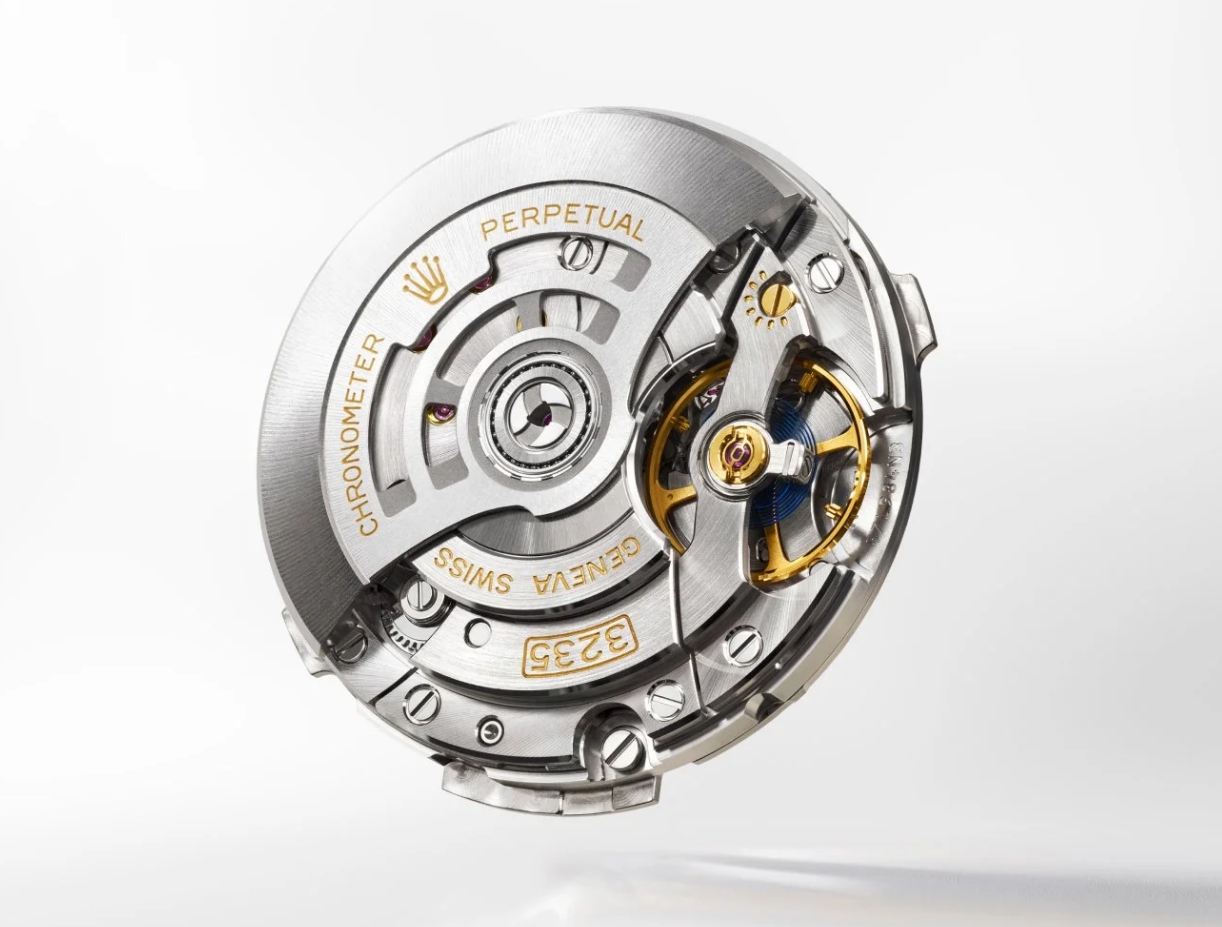
The movement image supplied with this article is useful as a reference to the architecture and decoration associated with calibre 3235. It should not be presented as a view through the watch itself because the Datejust 41 uses a closed case back. Nor does the illustration establish which movement is fitted inside a replica.

Automatic movement illustration used for Rolex Datejust 41 replica comparison

The larger case gives the Datejust 41 more dial area than the Datejust 36, which makes the gradient especially prominent. It also means that lug shape and bracelet width have a stronger influence on the wrist. Someone choosing between the two sizes should compare real measurements and natural wrist photographs instead of assuming that the number 41 tells the whole story.

Related articles in the Rolex Datejust replica collection cover the different case sizes, bezels, dials and bracelets found across the series. Keeping those configurations organised is important because the Datejust changes through combinations rather than a single dramatic feature.

The green ombré version works because its darker edge gives a familiar watch a more restrained mood. A successful replica should preserve that gradual colour shift without allowing the dial to become muddy, then support it with an accurately proportioned bezel and a clearly identified bracelet. When those parts agree with one another, the watch retains the everyday character of a Datejust while looking distinct from the usual blue, silver and black configurations.

The Rolex 1908 Settimo Replica Makes Gold Feel Less Formal

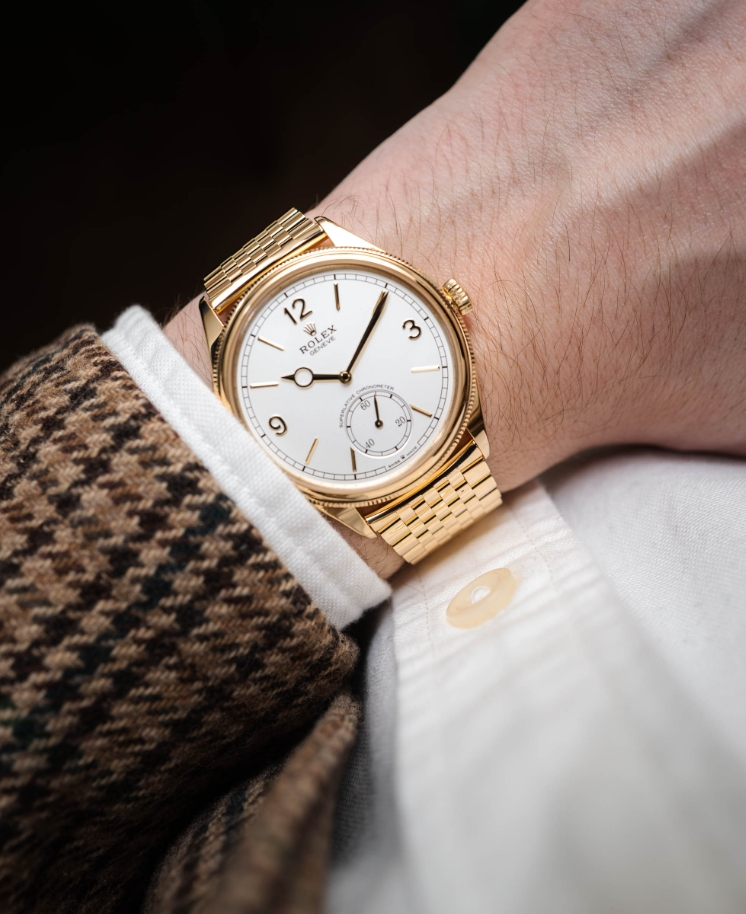
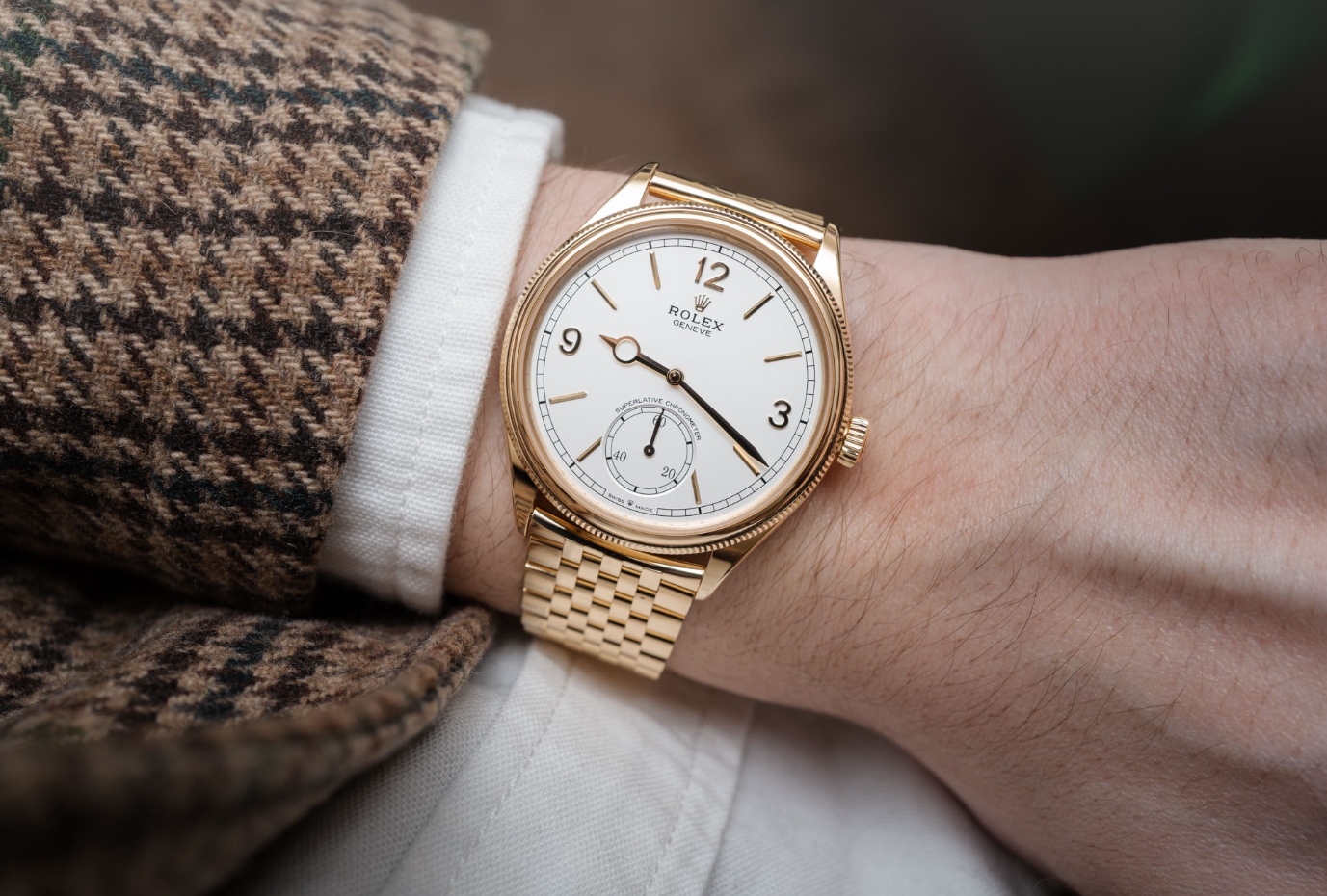
The Perpetual 1908 began as the quiet member of the modern Rolex catalogue. Its clean dial, small seconds display and slim round case placed it well away from the familiar territory of rotating bezels and chronograph pushers. The Settimo bracelet changed that balance. Gold now continues from the case around the wrist in seven narrow rows, giving the watch more presence without turning it into a conventional sports watch.

That change makes the watch an interesting subject for anyone comparing Rolex replica watches. A Rolex 1908 Settimo replica cannot be judged by the dial alone because the bracelet carries much of the identity. Its link shape, flexibility, colour and connection to the case matter as much as the numerals or the hands.

The history also needs to remain clear. Rolex introduced the 1908 collection in 2023 and added the Settimo bracelet in 2025. The original bracelet is made in 18 ct yellow gold and was developed specifically for this collection. Those facts describe the genuine watch. A replica version may reproduce its appearance with a different base metal, coating and movement, so its own specifications should be stated separately.

Rolex Perpetual 1908 replica with white dial and yellow gold Settimo bracelet on the wrist

The Settimo Bracelet Gives the 1908 Its New Character

Settimo means seventh in Italian, and the name refers to the seven rows of links running across the bracelet. The genuine construction does more than divide the surface into equal strips. Its outer links are slightly wider than those near the centre, while the rounded, fully polished surfaces scatter light across the wrist. That subtle variation prevents the bracelet from looking like a flat sheet of gold.

On a yellow gold Rolex 1908 replica with seven row bracelet, the first question is whether the link pattern retains that sense of depth. Links that are too broad can make the bracelet appear heavy, while shallow gaps can merge the rows when photographed from a normal distance. The supplied wrist images show why this matters: the bracelet occupies almost as much visual space as the case, so its proportions affect the impression of the whole watch.

Flexibility is equally important. A bracelet made from many small parts should follow the curve of the wrist rather than forming two rigid sections beside the case. This is difficult to judge from a straight product photograph. A natural wrist view gives a better indication of how quickly the links turn down after the lugs and whether the bracelet sits evenly instead of pushing the watch head upwards.

White dial Rolex Perpetual 1908 replica and seven row bracelet worn with a jacket cuff

The connection between the first link and the case is intentionally different from the flush end links found on many Rolex sports watches. The Settimo leaves visible space around its attachment, creating a lighter and more vintage appearance. That opening should not automatically be treated as a fault in a replica. What matters is whether both sides follow the same curve, whether the gaps are even and whether the first links can move freely.

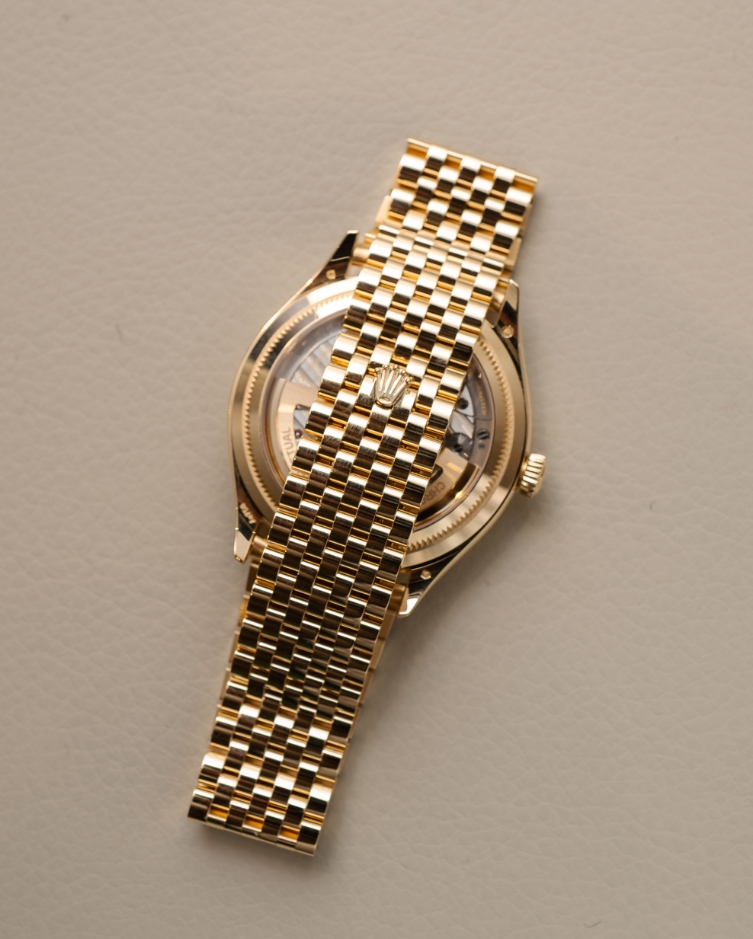
The rear view of the bracelet is especially useful here. It reveals how the narrow rows come together, how much space exists between them and whether the underside has been finished consistently. It can also expose sharp edges or bulky joints that a bright frontal photograph conceals. For a Rolex 1908 replica made for formal wear, comfort depends on these hidden surfaces as much as on the polish visible from above.

Rear view of a Rolex Perpetual 1908 replica showing the seven row bracelet

Gold tone must remain consistent across the case, bracelet and clasp. A warmer bracelet beside a paler case breaks the continuous appearance that gives this version its appeal. Lighting can exaggerate such differences, so the components should be compared in the same frame. If the replica uses plating or a coloured coating, the listing should identify the underlying metal and the treatment rather than allowing the word gold to imply solid precious metal.

The genuine bracelet closes with a concealed Crownclasp, leaving an almost uninterrupted pattern on the wrist. A similar exterior on a replica says little about the strength of its hinges or the precision of the closing action. The clasp should close securely, sit flat and allow the bracelet to be sized without distorting the flow of the smaller links. These practical details determine whether the ornate construction remains comfortable after several hours of wear.

A Simple Dial Leaves Little Room for Error

The white dial keeps the bracelet from overpowering the watch. Arabic numerals at 3, 9 and 12 frame the centre, while a small seconds counter occupies the lower half. The hour hand has a distinctive open circle and the minute hand uses a sharper, sword-like form. There is no date window or broad bezel to distract from their proportions.

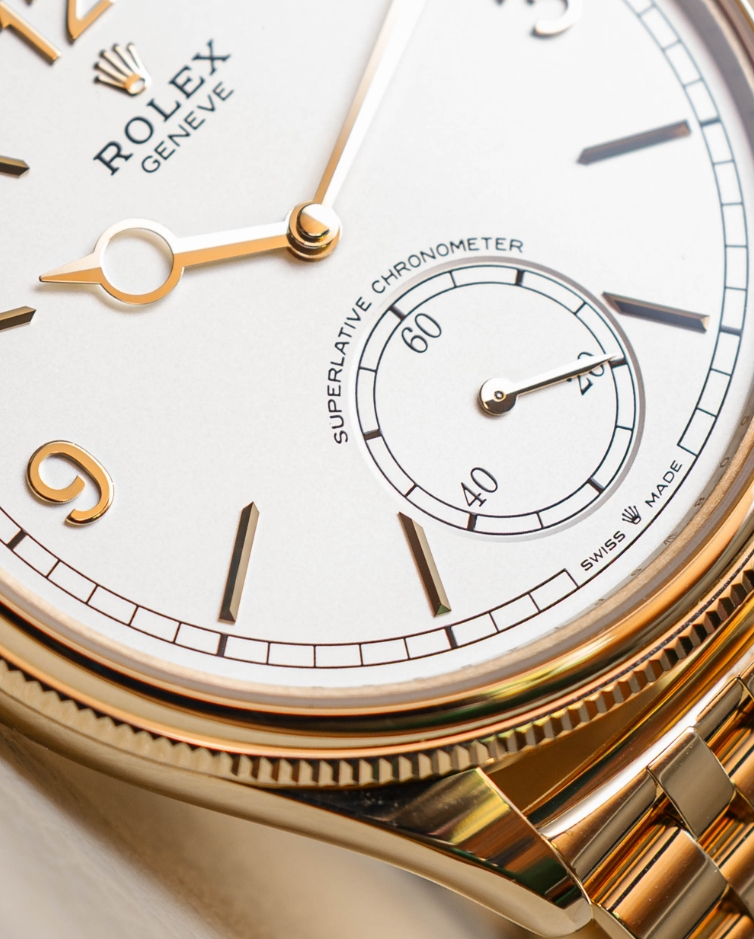
That simplicity makes a white dial Rolex Perpetual 1908 replica less forgiving than it first appears. If the small seconds counter sits too high, the lower portion becomes crowded. Oversized numerals reduce the open space around the hands, while thick printing can make the minute track look darker than the rest of the dial. A close photograph should therefore show the spacing of the elements as well as the sharpness of the text.

Close view of the white dial and small seconds display on a Rolex Perpetual 1908 replica

The bezel adds another layer that is easy to overlook. On the genuine watch, the upper section is domed and the lower edge is finely fluted. The two surfaces respond differently to light, creating definition without the width of a sports bezel. A replica with deep, coarse fluting can look more decorative but less faithful to the restrained character of the 1908. An angled photograph is more revealing than a direct front view because it shows the bezel, crystal and case profile together.

The genuine 39mm diameter is part of the watch’s dress proportions, but diameter alone does not determine how a replica wears. Case thickness, lug curvature, the height of the back and the way the bracelet falls all influence its presence. The wrist images suggest a compact face with considerable visual richness from the bracelet. Actual measurements are still needed before drawing conclusions about fit on a different wrist.

The transparent case back introduces the final comparison. Rolex fits the genuine 1908 with calibre 7140, decorated bridges and a cut-out rotor. Those specifications, including the official power reserve, do not transfer to a replica simply because the movement looks similar through the glass. A Rolex 1908 replica with transparent case back should identify the movement actually installed and separate decorative components from functional architecture.

Transparent case back of a Rolex Perpetual 1908 replica showing the decorated movement

The supplied rear photograph is useful for examining bridge shapes, screws, engraving and rotor colour. It cannot confirm the movement’s origin, accuracy or power reserve. Those points require documentation or testing. The same distinction applies to water resistance: a transparent back and polished case may look convincing, but pressure resistance must be measured rather than inferred from appearance.

Readers can find related coverage in the Rolex 1908 replica collection, where the focus remains on the proportions and finishing that separate this dress watch from the brand’s sports references. The Settimo version deserves its own place in that group because the bracelet changes more than the material around the wrist. It changes how the entire watch carries light.

The most successful interpretation will keep that effect controlled. The bracelet needs enough movement to drape naturally, the yellow tone should remain consistent, and the white dial must preserve the open spacing of the original layout. When those details work together, the 1908 feels rich without becoming loud. That balance is the real point of the Settimo bracelet and the most useful standard for assessing a replica.

The Replica Rolex Daytona 126502 Replica Takes A Softer Turn

The Daytona 126502 has a familiar outline, but its appeal depends on details that a small photograph can easily flatten. White dominates the dial, while the anthracite bezel gives the face a different frame from the usual black. For a Rolex Daytona 126502 replica, getting that relationship right matters more than adding another reference number to a familiar case.

For readers following Rolex replica watches, this is a useful reference to examine closely. Its distinctive features involve surface finishes, proportions and construction, all of which can disappear behind an impressive specification list. The genuine watch establishes the design; the materials and performance of any replica need to be assessed separately.

Angled view of a white dial Daytona with a metal bracelet resting on an open book

A White Dial That Depends on More Than Colour

Rolex describes the genuine dial as grand feu enamel applied to four ceramic plates, one for the main surface and three for the counters, before they are mounted on a brass base. This construction gives the reference a specific technical identity. A replica described as having an enamel dial needs evidence of its own manufacturing process; a glossy white coating alone does not establish the same construction.

Front view of a white dial Daytona with a dark bezel and metal bracelet

Visually, the important relationship is between the broad white surface and the smaller counters. The dial needs enough definition around those counters to keep the face legible without allowing them to overwhelm it. Examine the printing near the central hands, the edges around the applied markers and the spacing of the minute track. These small areas reveal more than a photograph in which the whole dial has been exposed almost to pure white.

Angled wrist view showing the Daytona dial bezel and bracelet

A white dial Rolex Daytona replica also needs to be considered under consistent lighting. A cream tint in one photograph and a cool white finish in another may come from the surroundings or the camera’s processing. The same applies to apparent colour differences between the main dial and the counters. Several photographs taken together are more useful than unrelated images assembled from different sources.

The bezel deserves the same attention. The genuine 126502 uses an anthracite Cerachrom bezel made from ceramic enriched with tungsten carbide. Its revised tachymetric scale has horizontally oriented numerals. These features distinguish the reference from a Daytona that simply combines a white dial with a conventional black insert.

For a Rolex Daytona replica with a grey bezel, shade and finish should be considered together. A dark insert can appear lighter under a strong reflection, while an evenly lit photograph may reveal a much flatter surface. The width of the surrounding metal ring also affects the face: too much visible metal can make the dial opening seem smaller and change the balance between the bezel and the case.

That is why a straight front view and a restrained angled view serve different purposes. The first makes the scale, counter spacing and alignment easier to compare. The second reveals the relationship between the crystal, bezel surround and upper case. Neither needs dramatic lighting to be useful.

The Case, Bracelet and View Through the Back

Rolesium has a precise meaning on the genuine reference: Oystersteel combined with platinum, including the bezel surround and case back ring. It is not a separate alloy. On a replica, a similar colour scheme does not establish the same metal content, and additional weight does not demonstrate that platinum has been used. Material descriptions should identify the actual components rather than borrow the official designation as a complete specification.

The case profile matters just as much as the face. A replica can look proportionate from above while sitting noticeably high because of its underside. A side photograph should show how the case back meets the middle case and how the bracelet leaves the lugs. Together, those details help explain whether the watch is likely to sit close to the wrist or feel more top-heavy.

The supplied wrist photographs offer a useful change of scale from the isolated product views. They show how the dial opening, bezel and first bracelet links occupy space together. They cannot establish a universal fit, because wrist size and camera distance are unknown, but they give the design a more practical context than a tightly cropped dial photograph.

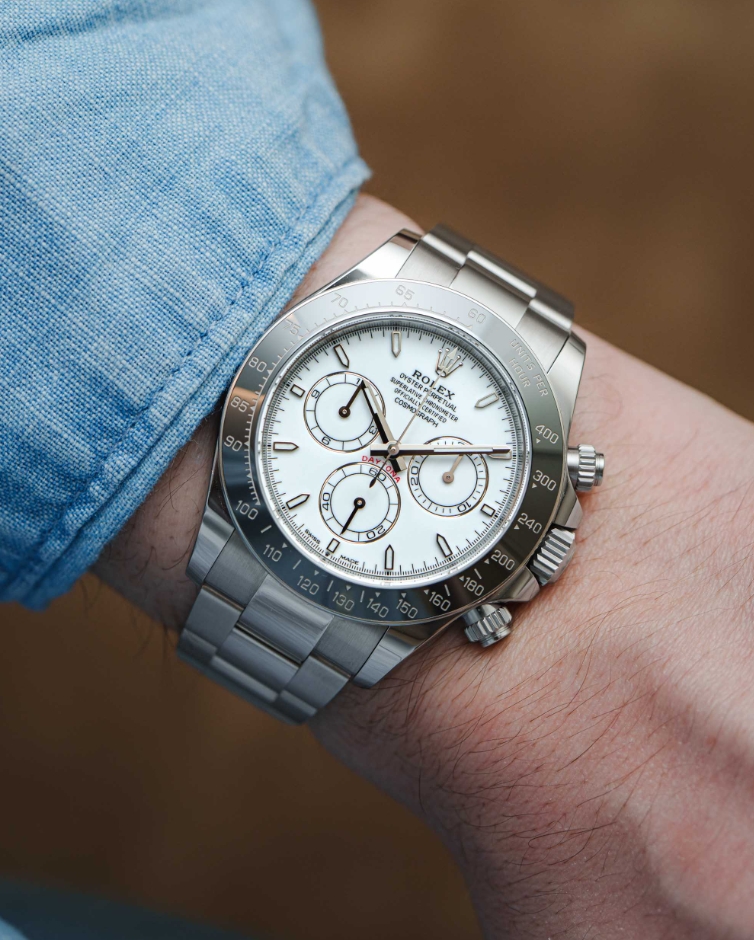
White dial Daytona worn beside a light blue shirt cuff


For a Rolex Daytona replica for everyday wear, bracelet articulation and clasp fit deserve attention alongside case diameter. Look for clean transitions between the brushed outer links and polished centre links, then consider how freely the end links move. Surface finishing and comfort are related, but they are different qualities; a sharply photographed bracelet may still feel stiff or awkward when worn.

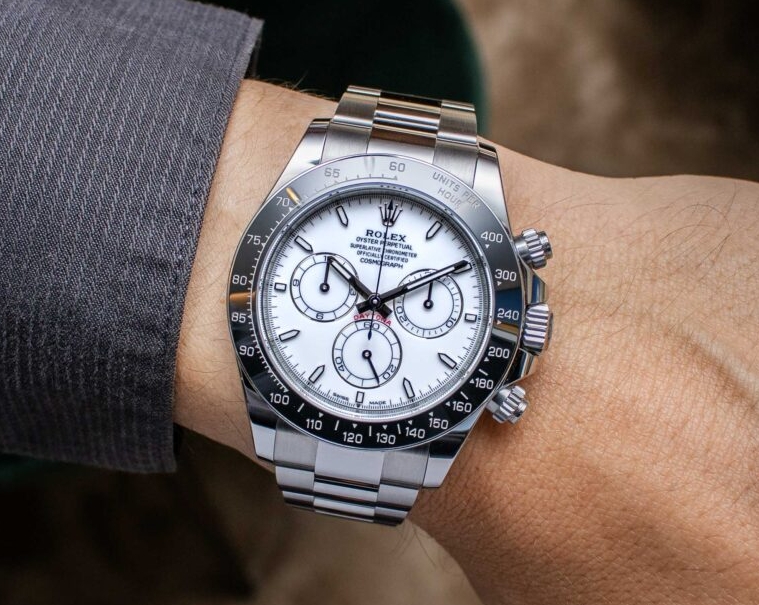
White dial Daytona worn beside a dark jacket cuff

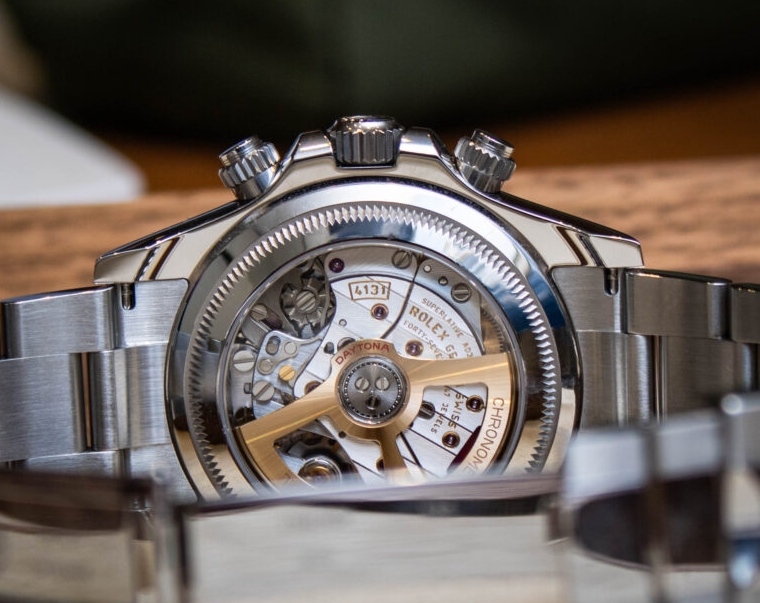
The transparent back changes the comparison again. The genuine watch displays Rolex calibre 4131. A Daytona replica with a transparent case back exposes its own movement to view, so the shape of its bridges, rotor and decorative components becomes part of the overall appearance. Similar engraving does not establish the movement’s origin or mechanical construction.

Transparent Daytona case back showing the movement and gold coloured rotor

The rear photograph is useful for discussing that visible arrangement, but it cannot establish timing accuracy or reliability. A continuous demonstration of the chronograph can show the central timing hand starting, stopping and resetting, along with the elapsed-time counters advancing. Power reserve and water resistance need separate evidence. Neither can be inferred from the appearance of the movement or screw-down controls.

Our Rolex Daytona replica collection provides a wider context for comparing dial layouts, bezel treatments and case details across the series. The 126502 should retain its own identity within that discussion. Its character depends on the combination of white, anthracite and polished metal rather than on any one feature in isolation.

The most useful assessment of this reference therefore begins with the face and follows through to the wrist and the back. A balanced dial, a convincing grey bezel and a well-proportioned case need to work together. Documented materials and movement details then explain what the replica actually offers. That is a more substantial basis for judging the watch than either its resemblance in one photograph or the length of its advertised specification.

Rolex Oyster Perpetual Marks 100 Years With New Replica Watch Details

A hundred years after the Oyster first appeared, Rolex has gone back to one of the ideas that helped define the brand in the first place. The original Oyster case arrived in 1926 with a straightforward purpose: better protection for a wristwatch that had to cope with water, dust and everyday wear. A century later, that basic idea is still visible throughout the Rolex range.

For readers following Rolex replica watches, the 2026 anniversary is interesting for another reason. The Oyster Perpetual is one of the least complicated watches in the Rolex catalogue, yet it can be surprisingly difficult to reproduce convincingly. There is no rotating bezel, chronograph display or date window to distract the eye. What remains is the case, dial, hands, markers and bracelet, which means small differences are easier to notice.

Rolex Oyster Perpetual anniversary replica watch

The new anniversary models make those details even more important. Rolex has used colour, unusual material combinations and several quiet references to the centenary rather than completely changing the Oyster Perpetual formula.

The New Oyster Perpetual 36 Is All About the Dial

Rolex Oyster Perpetual 36 Jubilee dial replica watch

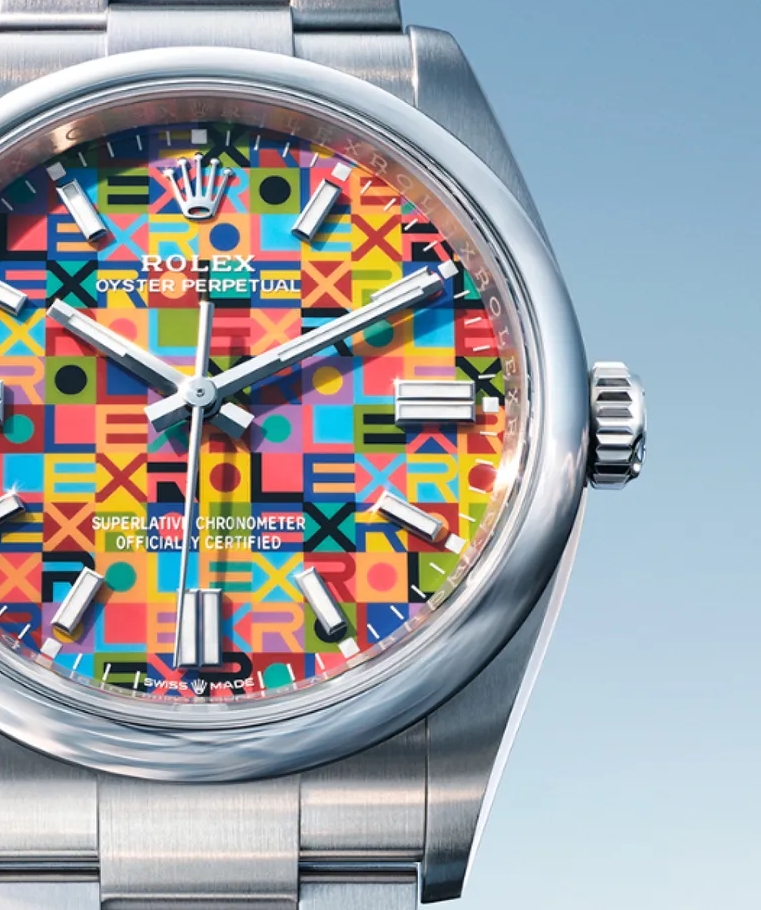
The Oyster Perpetual 36 is probably the most immediately recognisable model in the 2026 group. Its lacquered Jubilee motif dial uses the letters of the Rolex name in a repeating design made from ten contrasting colours.

It is much busier than the plain blue, black, silver or pastel dials usually associated with the collection, but the basic watch underneath remains familiar. The smooth bezel, three central hands and Oyster bracelet keep the design recognisably Oyster Perpetual.

For anyone comparing 2026 Rolex Oyster Perpetual 36 replica watch details, the dial should be the first place to look. Simply reproducing a colourful pattern is not enough. The positioning of the lettering, separation between the colours, alignment around the hour markers and quality of the printed motif all affect how convincing the dial looks.

This is where the simplicity of the Oyster Perpetual becomes unforgiving. On a complicated chronograph, a small printing difference can disappear among other details. Here, the dial has nowhere to hide it.

The Centenary Models Take a Quieter Approach

The colourful Jubilee dial is only one side of the anniversary story. Rolex has also introduced yellow Rolesor Oyster Perpetual models specifically connected with the 100th anniversary of the Oyster.

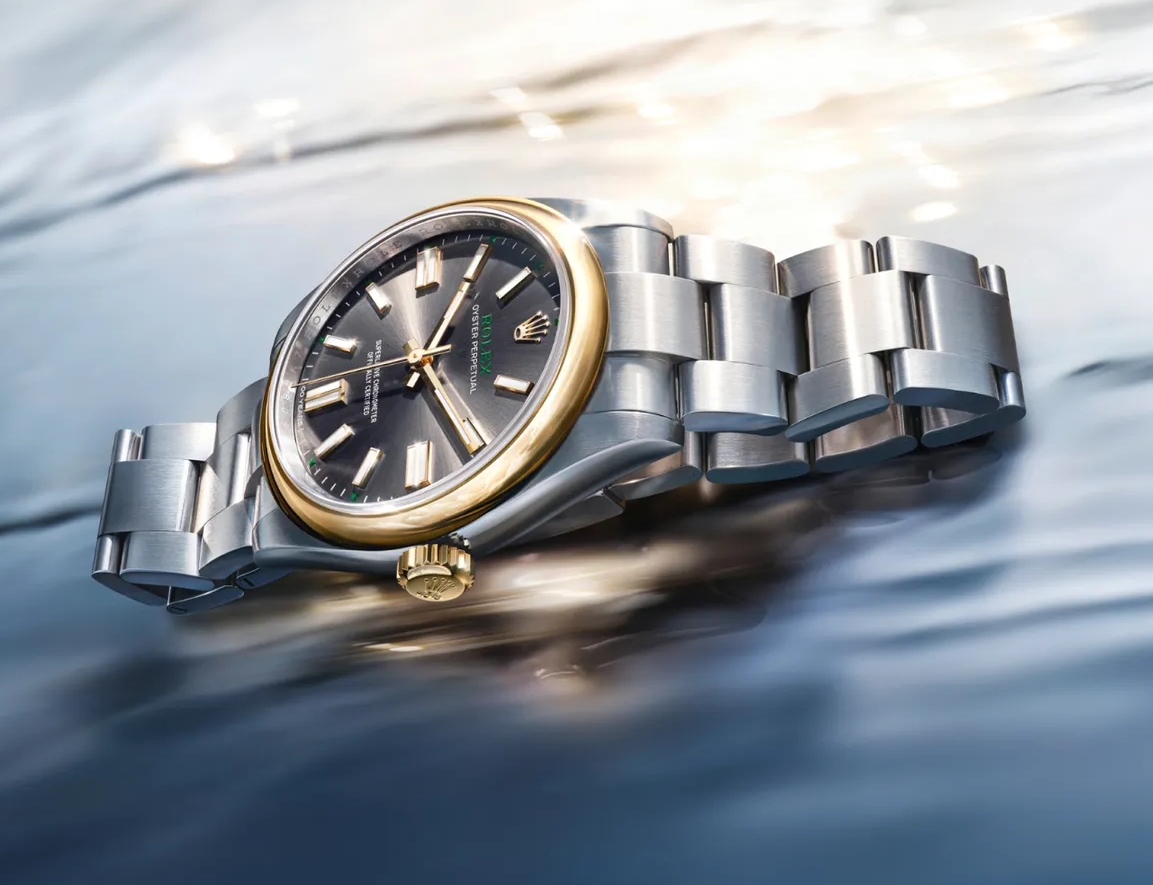
These watches use a slate dial rather than a bright colour. Look more closely and the anniversary references start to appear. The Rolex name is printed in green, green squares mark each five minute interval, and the usual Swiss Made inscription at six o’clock is replaced by the words 100 years.

The winding crown carries another discreet reference, with the number 100 appearing in relief.

None of these details is especially large. That makes them more important when examining an Oyster Perpetual 100th anniversary replica watch. The shade of green, positioning of the minute markers and proportions of the 100 years text matter more than adding a large anniversary logo that was never part of the original design.

Replica Watch.jpg Rolex Oyster Perpetual gold replica watch anniversary design

The Oyster Perpetual 41 Has an Unusual Metal Combination

The 41mm anniversary model is also interesting because Rolex has handled yellow Rolesor differently from the way many people expect.

The smooth bezel and winding crown are made in yellow gold, while the middle case and the entire Oyster bracelet use Oystersteel. That means the bracelet does not have the familiar yellow gold centre links seen on many conventional two tone Rolex watches.

It is a small distinction, but an important one when comparing a Rolex Oyster Perpetual 41 replica watch. A watch fitted with a conventional two tone Oyster bracelet would immediately change the appearance of the 2026 model.

The smooth bezel deserves the same attention. Its width and polished finish frame the dial without dominating it, and even a slight difference in proportion can make the case appear heavier or thinner than it should.

Simple Rolex Designs Expose More Mistakes

The Oyster Perpetual sometimes looks like an easier watch to compare because there are fewer components on the dial. In practice, the opposite can be true.

The hour markers need to sit at the correct distance from the minute track. The hands should reach naturally toward their respective markers. The Rolex coronet at twelve o’clock needs to have the right scale, while the text beneath it must not look oversized or compressed.

Case proportions are equally noticeable. Lug shape, bezel width and the way the bracelet meets the case all contribute to the familiar appearance of the watch.

These are the details worth checking when looking at Rolex Oyster Perpetual replica watch case and dial accuracy. A watch can claim the correct 36mm or 41mm case diameter and still appear wrong if the bezel, lugs or dial opening are out of proportion.

The Oyster bracelet is another part that can easily be overlooked. Its three piece construction is simple, but bracelet taper, end link fit and clasp proportions affect the overall silhouette once the watch is on the wrist.

From the Original Oyster to the Modern Oyster Perpetual

The story behind the 2026 watches reaches back to 1926, when the waterproof Oyster case helped solve one of the practical problems facing early wristwatches. Rolex added its Perpetual self winding rotor several years later, reducing the need for regular manual winding and helping establish the formula behind the Oyster Perpetual name.

That foundation eventually spread across much of the wider Rolex collection. The Datejust introduced a date display, the Submariner adapted the Oyster architecture to diving, and later models such as the GMT Master and Daytona added their own specialised functions.

The Oyster Perpetual remained much closer to the original idea. A clean dial, automatic movement, Oyster case and straightforward bracelet are still at the centre of the watch.

That is why Rolex Oyster Perpetual replica watches should be judged differently from more complicated Rolex models. The attraction is not a long list of functions. It comes from getting a small number of familiar details right.

The 2026 Designs Give Replica Watch Readers More to Compare

The anniversary releases make the Oyster Perpetual more interesting without turning it into a completely different watch.

The multicoloured 36mm version puts most of the attention on dial printing and colour. The slate dial centenary watches are more restrained, so details such as the green minute markers, anniversary text and crown become more important. The 41mm yellow Rolesor configuration adds another point of comparison because of its unusual relationship between the gold bezel and crown and the all steel Oyster bracelet.

When comparing these models, it makes more sense to look beyond the logo alone. Dial spacing, bezel width, marker proportions, bracelet taper, crown shape and case profile should all work together.

Readers interested in the wider collection can continue through our Rolex Oyster Perpetual replica watches section, where individual references, dial designs, sizes and model comparisons can be organised separately.

One hundred years after the Oyster first appeared, the strongest part of the idea remains surprisingly simple. Rolex has added colour and anniversary details for 2026, but it has not abandoned the clean proportions that made the Oyster Perpetual recognisable. For replica watch readers, that simplicity is exactly what makes the new models worth studying closely.